
 EN
EN RU
RUAn empty industrial building can shorten a construction schedule, but it cannot manufacture a reliable trailer. Floors, utilities and cranes become productive only when product architecture, supplier evidence, repeatable fabrication, mixed-model flow and customer demand work together. The new plant in Vyazniki therefore matters less as occupied space than as a test of whether a brownfield site can become a controlled product system.
The announcement described a ramp, not a finished result
On 19 June 2026, Vzglyad reported the opening of RuAutoTrailer's full-cycle trailer plant in Vyazniki, Vladimir Region. The project used vacant space at the OSVAR industrial site and introduced the VollKraft range: curtain-side semi-trailers, container carriers, refrigerated bodies and flatbeds.
The report said more than 1.7 billion rubles had already been invested in a cluster whose planned investment exceeded 2.5 billion rubles. It described design capacity of up to 8,000 units a year, more than 500 intended jobs and possible regional tax receipts of as much as 1 billion rubles after design rate was reached.
Those numbers have different evidentiary status. Capital already spent is historical; jobs, taxes and design output are plans or conditional projections. The first-year plan of up to 1,750 units and the expectation of full capacity by 2029 define a multi-year industrialisation problem. They do not show that the plant was already producing 8,000 conforming trailers.

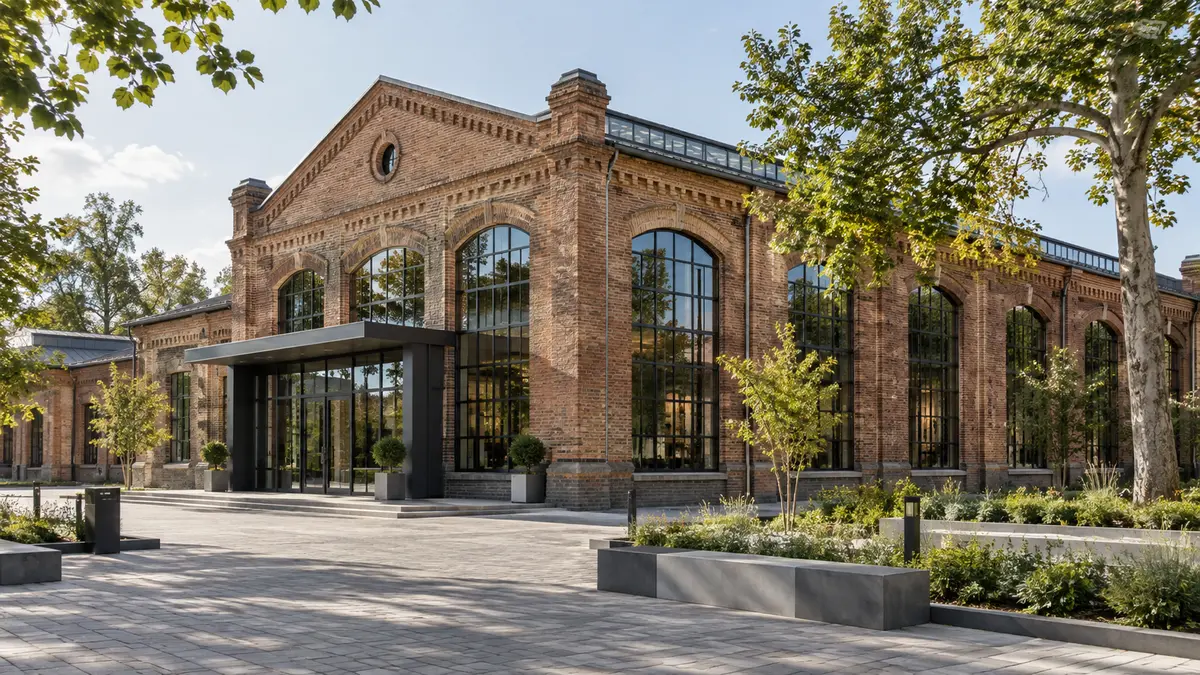
A brownfield starts with an asset audit
Vacant space is useful only after its constraints are measured. A trailer factory needs straight material routes, welding extraction, compressed air, electrical capacity, coating conditions, lifting coverage, fire protection, drainage and floors that tolerate concentrated loads. The old building's grid can help or quietly force waste into every unit.
An audit should classify each inherited feature as usable, repairable, relocatable or unsuitable. Crane capacity must match long frames and safe lifting points. Door geometry must accept completed refrigerated bodies. Floor flatness influences fixture alignment, while roof leakage or unstable temperature can undermine coating and dimensional control.
Reusing a site may reduce capital and time, yet savings should be calculated after remediation, routing compromises and maintenance risk. The correct comparison is not empty building versus greenfield shell; it is qualified production capability versus qualified production capability.
The product family needed a common architecture
Four trailer types can share longitudinal members, cross-members, running gear, brakes, electrics, landing legs, rear protection and coupling interfaces. Common modules improve purchasing scale, training, spares and service. They also concentrate risk: a weak shared bracket or routing rule can affect several models at once.
Platform governance begins with a controlled architecture. Engineering defines which interfaces are fixed, which dimensions form approved families and which options require new validation. Sales cannot promise arbitrary combinations merely because components fit in a drawing.
The bill of materials must be generated from configuration rules. Axle count, wheelbase, suspension, tyre, brake controller, floor, side structure, refrigeration preparation and coupling equipment should resolve into one manufacturable serial specification. A readable order and a digital build record must describe the same trailer.
Configuration release gates
- Confirm legal load, dimension and braking requirements for the intended operation.
- Select only validated chassis, axle, suspension and body combinations.
- Resolve customer options into a frozen bill of materials and work instructions.
- Check supplier availability and long-lead parts before promising completion.
- Protect the released configuration from uncontrolled workshop substitution.
- Link deviations, inspections and test evidence to the final serial number.
Each body type brought a different failure logic
A curtain-side trailer depends on frame stiffness, roof and side geometry, curtain tension, load restraint and smooth moving hardware. Small fabrication misalignment can make daily opening difficult or allow weather ingress. The product must remain usable after torsional road loading, not merely look square at final inspection.
A container carrier concentrates attention on twist locks, bolster geometry and load paths. Interface positions must hold tolerance because the carried box is already standardised. Corrosion, distortion or a damaged lock can turn a simple skeletal frame into a safety hazard.
A flatbed exposes deck, edge and restraint details to loading equipment and weather. Reinforcement must match actual cargo practice without adding unnecessary tare mass. A refrigerated trailer adds panel adhesion, insulation continuity, door sealing, thermal bridges, drainage and refrigeration-unit interfaces as product functions.
Welding controlled a very long product
Trailer frames accumulate dimensional error over length. Joint gaps, heat input, sequence, restraint and cooling can move axle references, kingpin position or body diagonals. Rework after painting is expensive, and cosmetic straightening can leave residual stress without restoring geometry.
Qualified procedures need material-specific parameters and accepted joints. Fixtures should locate functional datums rather than merely hold parts conveniently. First-off measurement and periodic checks reveal fixture wear before an entire batch drifts.
Weld quality cannot be delegated to final visual inspection. Consumable storage, preparation, welder qualification, parameter discipline, distortion measurement and defined repair routes form one system. Critical joints deserve traceable evidence proportional to their load and fatigue consequences.
Coating was appearance and lifetime engineering
Road trailers encounter water, salt, stone impact and inaccessible cavities. Surface preparation, cleanliness, profile, coating thickness, cure and sealing determine whether a smart launch product stays serviceable. Paint over contamination only postpones the evidence.
Design should avoid water traps and unvented overlaps. Production should measure blast conditions, environmental limits and cure rather than infer quality from colour. Repairs need compatible materials and recorded boundaries.
Corrosion performance reaches suppliers too. Axles, fasteners, connectors and bought-in modules need compatible protection. A well-coated frame can still fail early when interfaces create galvanic couples or retain moisture.
Multi-couplings turned products into a road-train system
The reported focus on multi-couplings for road trains with Kamaz tractors widened the engineering boundary. A drawbar, dolly or coupling arrangement changes articulation, swept path, braking coordination, electrical connections, load distribution and reversing behaviour.
Mechanical compatibility is necessary but insufficient. Dynamic analysis and representative tests should cover emergency braking, low-friction surfaces, crosswind, uneven roads, coupling wear and fault response. The tractor and trailers must exchange pneumatic and electrical signals predictably across allowed configurations.
Kamaz management described the plant as a strategic partner extending turnkey transport solutions. That proposition works only if responsibility for interfaces, documentation, diagnostics, service and changes is explicit. A road train sold as a solution cannot be supported as unrelated pieces when a fleet experiences a fault.
Suppliers determined whether variety could flow
Axles, suspension, brakes, tyres, steel, panels, refrigeration preparation, curtains, locks, lights and connectors arrive on different lead times. A nominally local final assembly can stop because one approved valve or fastener is unavailable.
Supplier readiness should combine technical qualification with rate evidence. Samples prove only that a supplier can make samples. Production trials, capacity reviews, sub-tier visibility, packaging standards and change notification show whether repeated supply can support the ramp.
Incoming control should follow risk. Stable capable suppliers may earn reduced inspection, while a new process or field signal requires containment. The factory should not replace supplier development with permanent sorting at its own gate.
Material flow had to serve mix as well as volume
A plant producing several body types can appear busy while starving its constraint. Long steel, axles and large panels need sequenced presentation; small fittings need kits that prevent searching and substitution. Excess work in progress hides shortages and defects while consuming floor space.
Mixed-model planning should protect common upstream operations and schedule variant work around actual capacity. Welding, coating and final inspection may each become the bottleneck at different mix. A single annual unit number cannot represent those load patterns.
Internal logistics needs safe routes that separate long frames, people, forklifts and completed products. Point-of-use replenishment and controlled supermarkets reduce travel, but only when inventory records and physical locations agree.

Capacity was a system property
Design capacity of 8,000 units a year is meaningful only with assumptions for working days, shifts, product mix, planned downtime, yield and changeovers. Dividing an annual headline by calendar hours creates a theoretical takt, not a demonstrated operating rate.
Every process needs cycle-time distributions rather than a best observed cycle. Availability, performance and first-pass quality combine to determine saleable output. A fast welding cell adds little if coating queues, missing kits or final-test failures block release.
The first-year plan of up to 1,750 units provides a learning stage. Management can measure repeatability, supplier delivery, staffing, defect escape, warranty signals and customer acceptance before raising the line rate. A ramp should expose constraints in controlled increments.
Evidence for the next rate gate
- Stable demand covers the proposed mix and planning horizon.
- Critical suppliers demonstrate delivery and quality at the higher call-off.
- The constraint sustains required cycle and changeover performance.
- First-pass yield improves without hidden offline repair.
- Maintenance, tools and qualified people cover every intended shift.
- Field performance remains acceptable as serial volume expands.
Quality evidence travelled with every trailer
A serial record should connect material lots, critical components, weld and coating evidence, deviations, brake configuration, torque confirmations, electrical checks and final test. Traceability is valuable when it answers a field question quickly, not when it merely generates paperwork.
End-of-line testing should verify braking and pneumatic integrity, lighting and controls, geometry, coupling operation, door and curtain function, plus refrigeration interfaces where applicable. Test equipment itself needs calibration and protected limits.
Layered process audits check whether standard work survives shift changes and schedule pressure. Product audit then approaches the trailer as a customer or regulator would, looking beyond individual operation sign-offs to the integrated result.
Five hundred jobs required a competence ramp
Planned employment of more than 500 people is a regional opportunity and an operational dependency. Hiring faster than trainers can qualify people produces nominal headcount without reliable capacity.
A skills matrix should identify coverage for welding, fitting, coating, inspection, maintenance, logistics and supervision. Training needs theory, observed practice and demonstrated competence on defined operations. Experienced employees should not become invisible bottlenecks whose absence stops release.
Supervisors and problem solvers must grow with shifts. Escalation routes, defect containment and restart authority should be learned before volume creates urgency. Safe work around long loads, cranes, chemicals and moving equipment remains a production condition.
Demand and working capital set the speed limit
A multi-product factory consumes cash before customers pay. Steel, axles, panels and refrigeration equipment enter inventory; work in progress accumulates; finished trailers may wait for documentation or pickup. More output can worsen liquidity if orders, deposits and collection do not keep pace.
The demand portfolio should distinguish binding orders, framework agreements, forecasts and market aspiration. Product mix matters because material cost, labour, lead time and margin differ. Filling capacity with low-contribution or highly customised work can overload engineering while weakening cash generation.
Investment gates should connect demand quality with industrial evidence. More equipment is justified when a demonstrated constraint blocks credible profitable orders, not simply because design capacity remains distant.
Tax projections remained conditional
The reported possibility of up to 1 billion rubles in regional tax receipts at design capacity depends on achieved production, prices, wages, profit, sourcing, incentives and the applicable tax structure.
Public reporting should separate capital deployed, people employed, units completed, units accepted and taxes actually paid. Each describes a different layer of impact. A projection can guide planning without being presented as a realised contribution.
The same discipline applies to the 2029 full-capacity expectation. It is a target date around which capabilities can be staged, not a guarantee independent of customers, suppliers and process learning.
Service completed the product system
Trailers spend their lives away from the factory. Parts catalogues, repair instructions, diagnostic guidance, warranty rules and a responsive spares network determine fleet uptime. Product-family commonality creates value only if service teams can identify the exact configuration.
Warranty returns should link symptom, duty, mileage, serial record, repair and root cause. A repeated curtain problem may point to hardware, body geometry, instruction or use; a brake complaint may involve the tractor interface as well as trailer components.
Closed-loop corrective action sends field learning to design rules, supplier controls, work instructions and tests. During a ramp, early failures are high-value evidence about assumptions that serial production is amplifying.
The real product was controlled variety
For trailer makers and fleet suppliers in Russia, the Vyazniki project shows the appeal of joining a brownfield site, several trailer families and tractor-compatible road-train solutions. Its strongest opportunity lies in common architecture and shared learning.
Its central risk is the same breadth. Four body types, many options and multi-coupling interfaces can multiply configurations faster than the factory can validate, supply and support them.
Eight thousand annual units would be an outcome of capable processes, balanced mix, qualified suppliers, competent people, accepted products and durable demand. The empty factory was a useful starting asset. The operating system that turns every order into a traceable, serviceable trailer is what would make the 2029 ramp real.















HOT NEWS INTERNATIONAL
Leave a comment