
 EN
EN RU
RU
For visitors considering Uzbekistan cultural journeys through Bukhara, the city's first international contemporary art biennale added a temporary exhibition programme to a place already known for mosques, madrasas, trading buildings and craft workshops. The 2025 edition placed new commissions inside a historic urban setting, with Uzbek artisans working alongside artists from other countries. Its starting point was an encounter between contemporary practice and the materials, skills and spaces of Bukhara.
Bukhara’s first international contemporary art biennale opened in September 2025 after a summer preparation programme. The Uzbekistan Art and Culture Development Foundation commissioned the event, with artists, artisans, chefs and performers working across historic venues. The completed first edition and the forthcoming second edition have separate dates and programmes. The 2025 exhibition combined contemporary works with buildings in the old city.
From the August announcement to the first edition
By Aug 25, 2025, preparations envisaged fourteen cultural heritage sites as a creative cluster, more than seventy projects involving local and international participants, and over sixty art objects. These were planning figures for the forthcoming event. Commissions were being developed alongside the architectural programme, with the heritage venues providing spaces for installations, performances and other activities during the first edition.
Artists, curators, cultural representatives and diplomatic guests attended the opening ceremony. Gayane Umerova was commissioner, Diana Campbell curator and Wael Al Awar artistic director of the architectural programme. The Uzbekistan Art and Culture Development Foundation connected the biennale with a wider old-city revitalisation programme. The event’s organisation included commissioned work, an architectural framework and collaborations between visiting practitioners and local makers.
The first edition ran from Sep 5 to Nov 23, 2025. Its organiser reports 1.8 million visitors, without specifying in the summary whether every entry represented a different individual. The attendance figure remains attributed to the organiser. The completed run lasted beyond the closing date used in earlier publicity; the retrospective dates identify the exhibition that took place in the city.
A curatorial theme built around making and sharing
Diana Campbell’s theme, Recipes for Broken Hearts, combined cooking, craft, performance and visual art. Her curatorial interpretation connected making with time, collaboration and emotional experience. Healing formed part of that artistic language. The programme approached it through materials and shared activity, with individual commissions developing the theme in different forms across the exhibition venues.
A legend about Ibn Sina, a lovesick prince and palov provided imagery for Recipes for Broken Hearts. The story belongs to the exhibition’s curatorial interpretation, rather than a documented account of the dish’s invention. Within the programme, hospitality, emotional experience and shared food preparation appeared alongside themes of loss and displacement. Artists approached those subjects through their chosen materials and collaborative working methods.
A commission is a work developed for an exhibition programme. An installation is one form such a work can take, while a performance unfolds over a defined interval. Craft collaborators contribute practical skills and material knowledge. At Bukhara, these roles appeared within named collaborations, with artists and artisans working on pieces that included textiles, sound, sculpture and choreography.
Named collaborations and the work of artisans
Dana Awartani worked with Behzod Turdiyev on Standing by the Ruins IV. Eva Jospin’s Bleeding Heart involved Abdulla Abdurazzakov, Madina Kasimbaeva and Nodir Rasulov. Slavs and Tatars collaborated with Abdullo Narzullaev on QOURDS & QURBAN. The commissions have individual titles and named participants. Local makers contributed particular skills to each collaboration alongside the practices of the international artists involved.
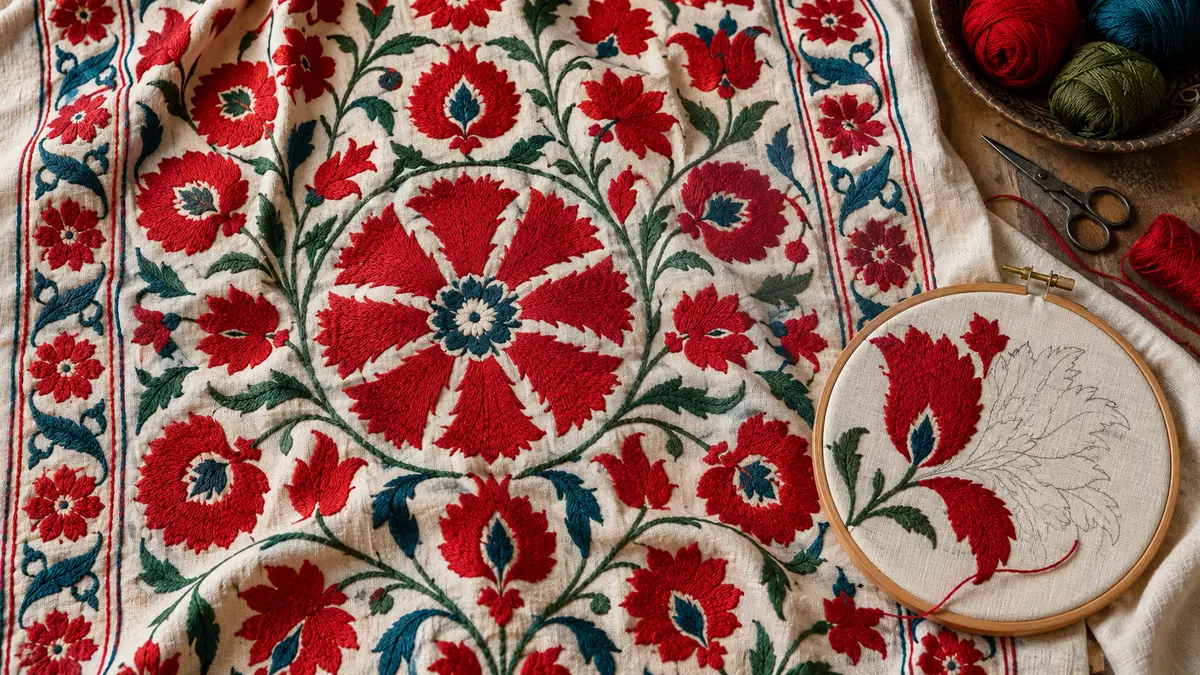
Ahmad Arabov collaborated with Samah Hijawi on Kinships and Cosmologies. Arabov works in suzani embroidery and trains younger artisans. An embroidered surface combines thread, fabric and a sequence of stitches, with the design built through handwork. Within a collaborative commission, decisions about the overall image sit alongside choices about material, stitch and execution made during the production of the textile.
Sound, textiles, choreography and construction skills contributed to different commissions. A sound work unfolds over time; an embroidered surface contains stitches that can be examined closely; choreography uses movement and performance. Artists and collaborators worked within those particular practices. Temporary commissions belonged to the exhibition programme, while the artisans’ broader work continued through teaching, restoration, making and performance in other settings.
Reading a collaborative credit
- Identify the title of the commission and the year attached to it.
- Read the named collaborators together, rather than treating one name as the complete authorship.
- Distinguish an artist biography from the description of the specific exhibited work.
- Check whether the programme describes an object, a performance or an event with limited dates.
Historic spaces as exhibition settings
Bukhara’s historic centre is a UNESCO World Heritage property with more than two thousand years of history and a substantially preserved medieval urban fabric. Religious, residential and commercial buildings occupy the old city’s streets and courtyards. The biennale’s venues formed part of this setting. Visitors moved through an existing town between exhibition spaces, encountering historic architecture alongside the temporary commissions.
A caravanserai and a madrasa have different historical functions. The former belongs to the movement of merchants, goods and travellers; the latter to teaching and religious scholarship. A mosque introduces another kind of use and another set of responsibilities. Those distinctions remain relevant when buildings host temporary cultural activity. The new exhibition does not replace the historical identity of its venue, and not every monument in the old city was a biennial site.
The developing Cultural District includes the Magoki Attori Mosque and historic caravanserais restored for cultural uses. Plans also include future institutions within the district. The old city’s heritage buildings provide the setting for this programme, with architectural conservation and contemporary activity taking place through separate projects. Restored spaces, temporary exhibitions and planned institutions occupy different stages of the district’s development.
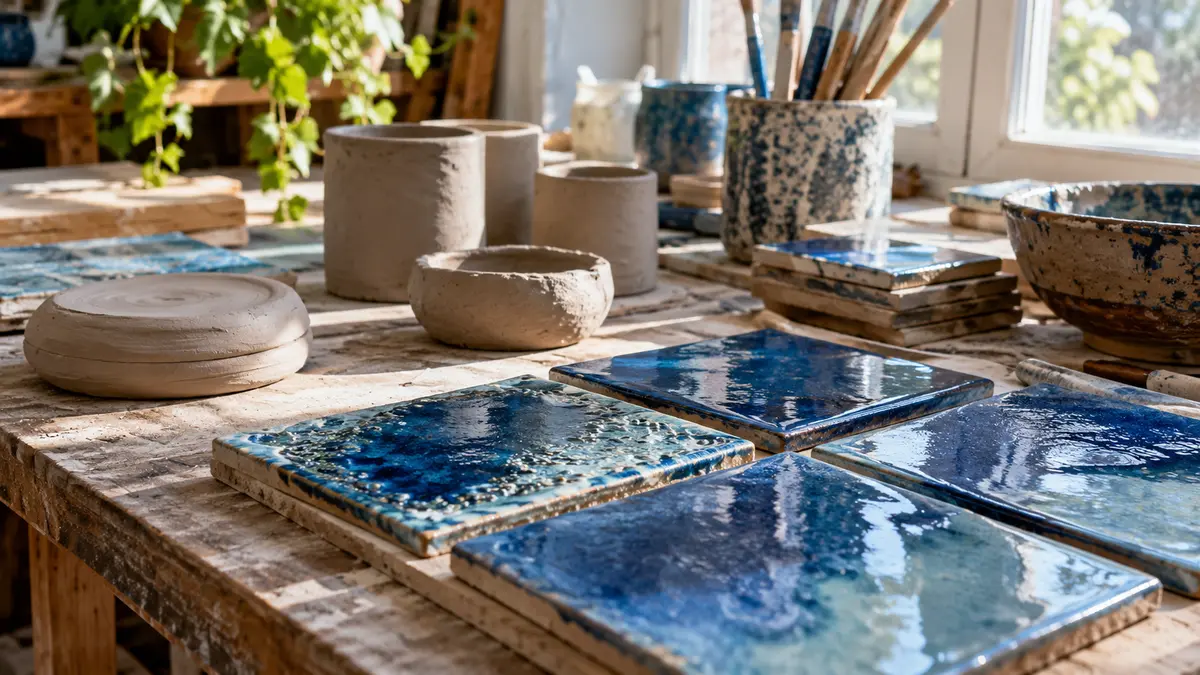
Materials connect the two scales of looking. A carved detail belongs to a building but can also be studied as the result of a craft process. A tile may form part of an architectural surface or a contemporary commission. The date, maker, function and restoration history determine which account is appropriate. Similar materials alone do not make two objects the same kind of historical evidence.
Cooking, music and movement in the programme
Uzbek and international chefs took part in the exhibition’s culinary programme. Food preparation introduced ingredients, duration and shared consumption alongside sculpture, textiles and performance. A meal has stages of preparation and a finished form that is consumed. The culinary contribution therefore involved work in kitchens and at tables, with aromas, serving and eating forming part of the encounter with the programme.
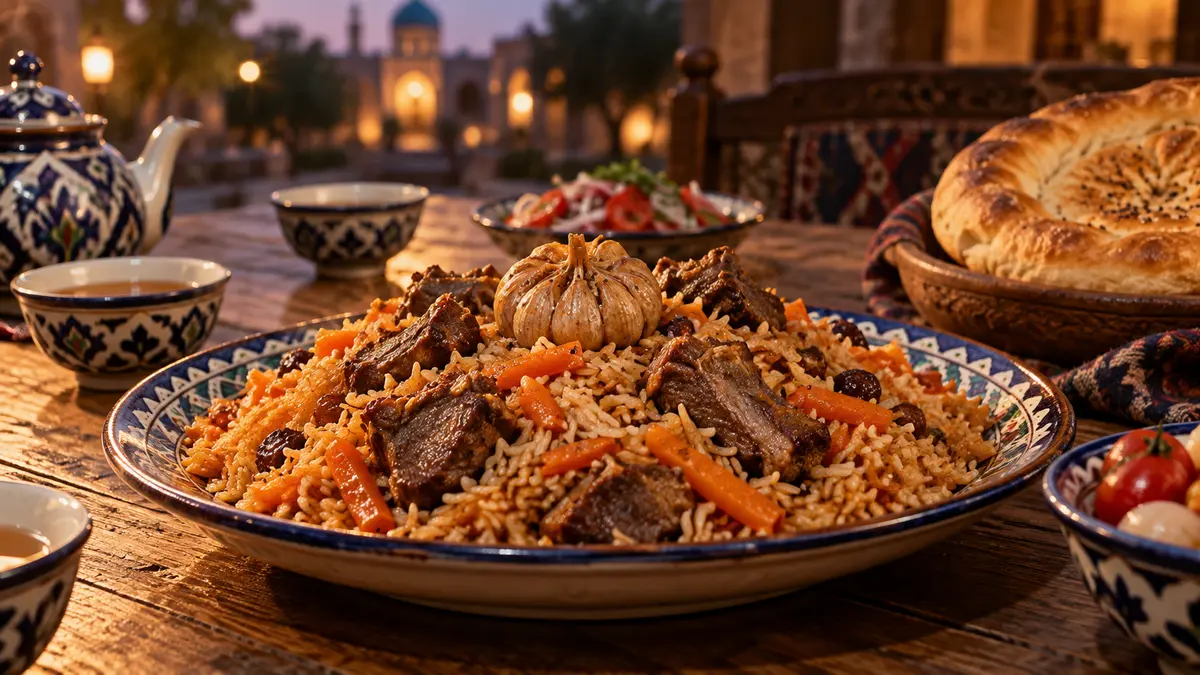
The relationship with palov also connects the programme with an established social practice. UNESCO inscribed Uzbekistan's palov culture and tradition in 2016. The practice involves the preparation and sharing of food in family and community settings, together with the transmission of knowledge. The biennial's use of cooking should be understood as a contemporary programme drawing on such practices, rather than as the origin of those practices.
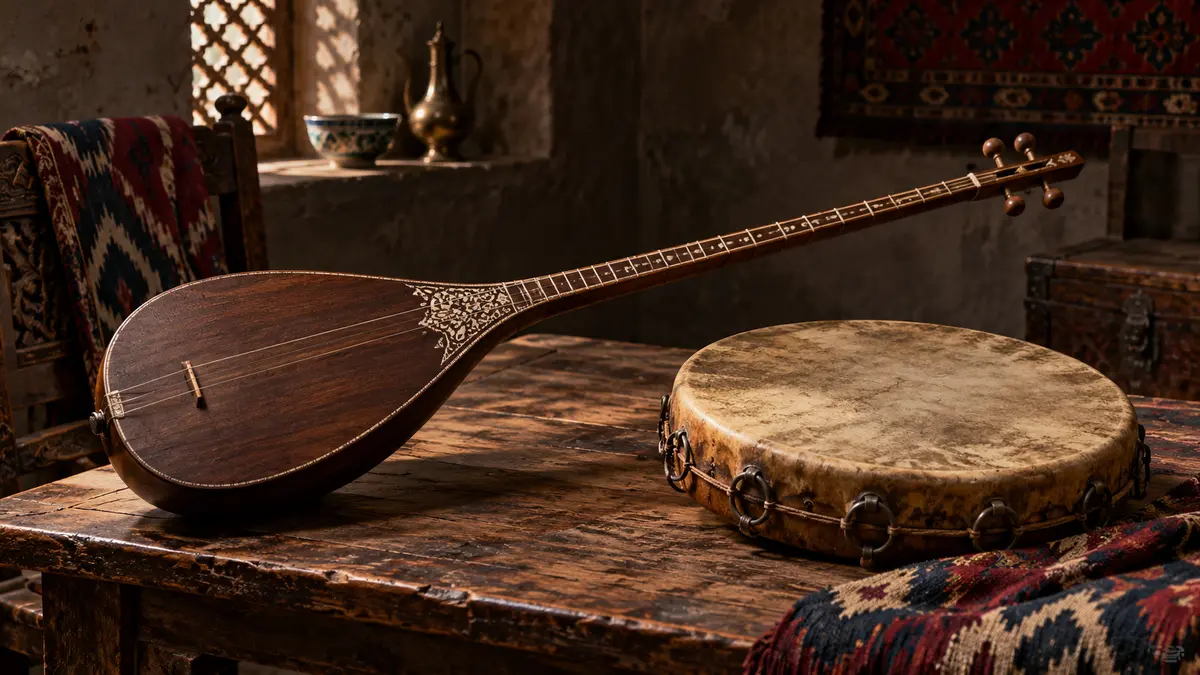
Uzbek and Indian collaborators participated in Intimate Conversations. The Uzbek group included choreographers Rayhon Akramova and Zilola Bagirova, musician Kamil Aslanov and cultural producer Rauf Avezov. Their practices include dance, maqom and the transmission of Bukharan repertoires. These fields involve different instruments, movements and teaching traditions. Individual participants brought their own professional backgrounds to the collaborative performance. Zilola Bagirova also plays the dutor and piano and sings. Her practice focuses on reviving and transmitting older Bukharan dance traditions through the ustoz-shogird, or master-apprentice, method. Practical learning connects movement and music through the teacher’s demonstration and the student’s repeated work.
Performances had their own dates within the first edition’s Sep 5–Nov 23, 2025 run. A scheduled work brought participants together for its presentation interval, while objects and installations occupied exhibition spaces for other periods. Sound, choreography and culinary activity each used time as part of the programme. Their presentation depended on the venue and arrangements of the individual commission.
Conservation, interpretation and the wider city
The tenth-century Ismail Samani mausoleum, the Poi Kalyan ensemble and surviving madrasas belong to Bukhara’s historic architectural setting. Their dates and functions differ from the contemporary works shown during the biennale. A temporary commission can occupy an older building without replacing its earlier use or construction history. The monument and the exhibited work remain separate subjects within the same visit.
Restoration adds a further layer. A restored surface, an original fragment and a new installation may all be visible during the same visit. The relevant explanations are the building's conservation record, the venue interpretation and the artwork label. A visually continuous surface does not by itself establish that all its parts were made at the same date. Likewise, a new work using an old technique is still a new work.
Bukhara also contains ordinary streets, shops, homes and working craft spaces beyond the exhibition programme. A temporary event has a defined duration; the city continues to function before and after it. Describing the biennial as part of Bukhara's cultural life leaves room for those different uses of space. It also avoids treating a residential neighbourhood as an exhibition set merely because visitors pass through it.
The old city's trading buildings provide another historical context for the meeting of local production and distant audiences. Markets organize exchange, while workshops organize making. A contemporary commission can involve both, but the finished object and the workshop visit are separate encounters. Learning a maker's name, technique and place of work adds specificity to the broader architectural route.
Bakhtiyar Babamuradov is a restoration architect and artisan working with mosaic and ganch carving. His work includes restoration connected with the Kalyan Minaret, Mir-i Arab Madrasa and the Bahauddin Naqshband complex. During the biennale, he collaborated with Marina Perez Simão on a separate commission. His conservation work and artistic collaboration involved different projects within his wider practice as an architect and maker.
The Hunarmand Artisan Association collaborated with Sara Ouhaddou on To the Guardians. The programme also included composers, choreographers and the Uzbekistan Beekeepers Association. An association’s participation involved a different organisational role from the contribution of an individual maker. Across the exhibition, these participants supplied knowledge and working practices beyond painting, including materials, performance, sound and collaborative production.
Commission titles and participant credits identify the work undertaken for the first edition. Each collaboration had its own makers and practices, while the exhibition placed them within the common theme Recipes for Broken Hearts. The programme included embroidery, restoration skills, cooking and music across different venues. Its archive preserves those credits after the temporary installations and performances have finished.
Tarek Atoui collaborated with Sharif Ostanov on a sound work scheduled for Sep 21–24, 2025. Those four dates formed one programme interval inside the longer exhibition run. A scheduled sound work has its own presentation times and participants, distinct from the opening period of the venue. The collaboration introduced listening and musical knowledge alongside visual and architectural commissions elsewhere in the biennale.
The Cultural District and the next announced edition
Plans for the Cultural District include a fine art museum, exhibition space, music school, artist studio and digital archive. These are future components of the developing programme. A museum would supply collection and display functions, a music school teaching space, and an archive access to recorded material. The first biennale occupied an earlier stage within that wider district initiative.
A second edition is announced for Sep 3 to Nov 21, 2027, with Kulapat Yantrasast as curator. That programme remains forthcoming. Its announced dates and curator belong to the next edition, while the 2025 commissions and participant credits belong to the completed first edition. The developing Cultural District forms the wider institutional setting for these successive events in Bukhara.
For a Bukhara itinerary, the distinction between permanent heritage, a developing cultural district and a temporary biennial is practical. A historic monument can be part of a year-round cultural route, subject to its own access arrangements. A museum has an operator and opening hours. A biennial has a defined run and may contain events with shorter dates inside it. Combining these different places requires information appropriate to each one.
The first edition combined historic venues with contemporary commissions, culinary activity, choreography and sound. Named artisans and international artists worked together on individual pieces, while the architectural programme addressed the spaces in which they were shown. ABA Travel’s Bukhara itineraries place the city within Uzbekistan’s wider cultural routes. A future visit has its own exhibition dates alongside the permanent monuments of the historic centre.


















HOT NEWS INTERNATIONAL
Leave a comment