
 EN
EN RU
RUA steering rack and an electric portal axle both sit beneath a vehicle, but they create different industrial problems. One translates a driver's command into precise direction on a low-volume premium platform. The other combines traction, gearing, brakes and packaging for city buses and must scale toward much larger output. Murommashzavod's new production therefore tested whether one factory could localise two safety-relevant mechatronic systems without treating localisation as a percentage alone.
The project combined two product systems
On 3 February 2026, Vzglyad reported that Murommashzavod had opened production of electric-power-steering racks and electric portal axles. The racks were intended for the Aurus platform; the axles were intended for several domestic electric-bus makers.
Investment exceeded 2.2 billion rubles, including a 1.75 billion-ruble concessional loan from the Industrial Development Fund. The financing supported more than 40 equipment units, including automated assembly lines and high-precision machines.
Those figures described project capital, not revenue or proof of stable product performance. Machinery creates capability only after processes, people and evidence consistently release conforming components.

Shared precision and electronics did not erase the different safety, validation and rate requirements of steering and bus propulsion.
The steering programme was low-volume and unforgiving
The disclosed plan was up to 350 steering racks a year, with localisation stated at 84%. Low volume does not reduce the consequences of a steering fault.
A rack converts steering input into wheel movement while an electric actuator supplies assistance. Mechanical geometry, friction, backlash, motor control, sensors and software all influence feel and safety.
At low volume, manual skill and engineering attention can hide process weakness. The operating system must distinguish controlled craftsmanship from undocumented fitting.
The axle programme needed a different ramp
The plant was producing more than 200 electric portal axles a year and described a perspective of up to 3,000 annually. Localisation was stated at 87%.
A portal axle lets traction components fit around a low-floor bus layout. It integrates motors, reduction gears, shafts, bearings, brakes, structure, cooling, sensors and electrical connections.
Moving from hundreds to thousands changes supplier demand, takt, automation, maintenance, training and warranty exposure. A successful first batch is not proof of rate readiness.
Localisation needed a denominator
A localisation percentage is meaningful only with a defined calculation: value, mass, operation, part count or another approved method. The source reported percentages but did not disclose their detailed denominator.
Managers need a component-and-process map showing domestic content, imported dependencies, criticality, alternatives and evidence. A locally assembled imported subassembly may add less resilience than a qualified domestic process for a critical part.
Progress should preserve performance. Replacing an imported bearing, sensor or electronic part can change noise, lifetime, calibration or functional safety even when dimensions match.
A controlled localisation gate
- Identify the exact imported component, process and dependency.
- Define technical, safety and lifecycle requirements.
- Qualify the domestic supplier and its sub-tier controls.
- Validate samples, production tooling and representative lots.
- Assess software, calibration and vehicle-level effects.
- Release the change with traceability and field monitoring.
Prior imports defined different baselines
The steering racks had previously been imported from Germany. The portal axles had previously come from Germany and China. The source did not name suppliers, prices or configurations.
Replacing imports requires more than copying external geometry. The local producer must reconstruct specifications, interfaces, process knowledge, test methods, service information and change discipline.
Benchmarking can establish a baseline, but intellectual property, original design responsibility and application requirements need clear governance.
Requirements began at the vehicle
A steering rack must fit suspension geometry, loads, electrical architecture, driver controls, autonomous functions and crash assumptions. An axle must fit bus structure, floor, wheels, brakes, power electronics and thermal system.
Vehicle manufacturers should provide controlled requirements and boundary conditions. Component teams should return verified interfaces, limitations and diagnostic behaviour.
A requirement without an acceptance method invites disagreement after tooling is committed. Every critical obligation needs analysis, inspection, demonstration or test.
Precision machining created the mechanical foundation
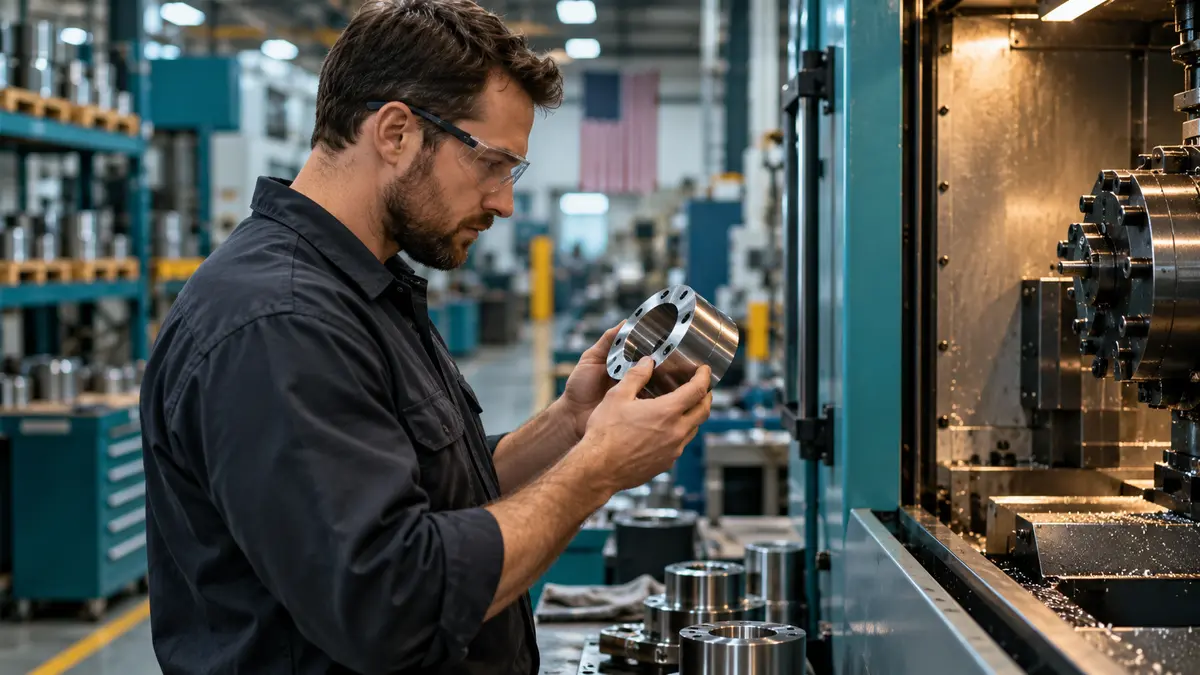
Gear teeth, bearing seats, shafts and housings depend on geometry, surface finish, material condition and cleanliness. Small deviations influence friction, noise, wear and heat.
Machine capability should be demonstrated across representative production, not one carefully selected part. Measurement systems also require capability, calibration and environmental control.
Tool wear and thermal drift need planned detection. End-of-line testing cannot economically compensate for an unstable machining process.
Assembly converted tolerances into performance
Press fits, bearing preload, gear mesh, fastener torque, sealing and lubrication interact. Parts that pass separately can form an unacceptable assembly.
Error-proofing should prevent wrong orientation or component selection. Controlled tools record critical torque or displacement where appropriate.
Cleanliness is a product feature. Particles can damage gears, bearings, seals and electronics after a component enters service.
Electronics made both components configurable
The steering actuator uses sensors, power electronics and control software to provide assistance and diagnostics. The electric axle relies on motor control, temperature and speed information, and coordination with vehicle systems.
Hardware, firmware and calibration form one released configuration. A software update can change force, thermal protection, energy use or fault response.
Programming stations need controlled binaries, compatibility checks, secure access and proof that the correct version reached the serial number.
Functional safety required independence
Steering and propulsion faults can create hazardous vehicle behaviour. Safety analysis identifies hazards, safe states, diagnostic coverage and required independence between functions.
A fault-detection claim needs evidence under realistic voltage, temperature, vibration and communication conditions. Failure injection can show whether diagnostics recognise a broken sensor or stuck actuator.
Safety work continues through manufacturing and service. A substituted part, programming error or repair method can invalidate assumptions from design analysis.

Machining, measurement, assembly, software configuration and functional testing formed one release chain.
End-of-line tests needed product-specific logic
A steering rack test may measure travel, force, backlash, assistance, sensor agreement, noise and fault response. An axle test may examine rotation, torque, speed, braking, temperatures, vibration, leakage and electrical behaviour.
Tests should find credible process defects without masking them through wide limits. Golden samples and reference artefacts help monitor the tester itself.
A pass result needs connection to serial number, configuration, equipment status and measured data. A green light without genealogy is weak evidence.
Two volumes implied two operating models
At 350 steering racks, flexible stations and strong traceability may be more valuable than high automation. At a future 3,000 axles, line balance, material presentation and equipment uptime become increasingly important.
The factory can share machining, metrology, laboratories, maintenance and quality systems, but product flows need clear priorities. A low-volume urgent rack should not destabilise a bus-axle takt without an explicit decision.
Capacity models should include changeover, yield, maintenance, training and tests, not only nominal machine cycles.
Rate readiness was evidence, not intention
The path from more than 200 axles toward 3,000 requires demonstrated suppliers, trained shift coverage, capable processes, spare parts and customer schedules. The higher number was a perspective, not achieved output.
Ramp gates can release equipment or shifts after first-pass yield, cycle time, safety, delivery and warranty indicators meet limits.
Expanding before root causes stabilise multiplies scrap and field risk. A slower evidence-led ramp may reach dependable volume sooner.
Supplier changes carried vehicle risk
Local sources for castings, forgings, gears, magnets, bearings, seals, sensors and electronic components may mature at different rates. Criticality should guide development effort.
Supplier quality includes process controls, special characteristics, sub-tier management and notification before change. Incoming inspection cannot reproduce every manufacturing condition.
Dual sourcing provides resilience only if both paths remain qualified and configurations are controlled. Mixing sources without evidence can increase variation.
Traceability made containment precise
Each rack or axle should link to material lots, components, operators, tools, software, calibration and tests. The required depth follows safety and failure analysis.
If a supplier lot drifts, genealogy identifies affected serial numbers and vehicle customers. Precise containment protects users without stopping unrelated production.
Records need controlled access, retention, backups and audit history. Data reconstructed after a complaint is less reliable than data captured at the operation.
Autonomous capability was an interface claim
The company said the steering rack could support driverless control. The source did not provide a vehicle demonstration, automation level or independently verified metric.
Automated steering needs command authority, feedback, diagnostics, cybersecurity, fallback and coordination with braking and perception. Component capability is only one layer.
Vehicle-level validation should cover normal manoeuvres, limits, communication faults and degraded modes. Marketing language must not outrun system evidence.
Efficiency claims required duty-cycle evidence
The source associated the products with lower fuel use, greater safety, comfort, energy efficiency and reduced maintenance costs. It did not quantify those effects.
Electric assistance can reduce continuous hydraulic demand; integrated axles can improve packaging and drivetrain architecture. Actual benefit depends on vehicle mass, route, climate, control and maintenance.
Comparisons need a defined baseline, representative duty cycle and measurement uncertainty. A bench gain may not survive vehicle operation.
Serviceability shaped lifetime economics
Bus fleets value availability. A component that is efficient but difficult to diagnose or repair can raise total cost.
Design should define replaceable units, access, lifting, special tools, software procedures and safe isolation. Service documentation must follow the installed configuration.
Initial spare parts should reflect failure modes and replenishment time. Excess inventory ages; insufficient inventory immobilises vehicles.
Field feedback closed the industrial loop
Warranty returns and fleet data should connect symptoms to serial configuration, vehicle duty, repair history and physical findings. Returned parts need controlled analysis.
Corrective action should reach design, supplier process, factory instruction, test limit or service guidance as appropriate. Replacing a part without understanding cause only resets the clock.
Early field monitoring is especially important during localisation because new suppliers and processes may reveal interactions absent from qualification samples.
Financing needed milestone discipline
The concessional loan enabled capital investment, but repayment economics depend on saleable output, customer programmes and contribution after quality and service costs.
Management should separate installed equipment, qualified capability, contracted demand and paid deliveries. Combining them creates premature confidence.
Further capital can follow product approval, rate evidence and credible demand rather than headline capacity alone.
Questions for the dual-product factory
- What exactly sits inside each localisation percentage?
- Which safety requirements and interfaces are owned by the component maker?
- Can machining and assembly repeat capability across shifts?
- Does every serial number connect to hardware, software and test data?
- What evidence releases the axle ramp from hundreds toward thousands?
- How quickly does field learning change production and service?
Quality planning had to precede serial tools
Before production release, cross-functional teams should trace each product function to potential failure, prevention, detection and reaction. That work connects design risk with process controls instead of leaving quality inspectors to interpret drawings after equipment arrives.
Special characteristics then appear consistently in supplier specifications, machining plans, assembly instructions, test limits and service records. If the same critical dimension carries different names or tolerances across documents, traceability becomes cosmetic.
Control plans must evolve with evidence. A stable process may justify reduced sampling; a supplier change or field signal may require temporary containment. The decision should follow measured capability and risk, not a desire to reduce inspection cost.
People connected the two production models
Machinists, assemblers, metrologists, software technicians, maintenance specialists and test engineers need task-specific qualification. Rapid hiring for the axle ramp can dilute competence unless instructors and supervised practice grow first.
A skills matrix should show shift coverage and fragile single-expert dependencies. Cross-training creates flexibility, but only after observed assessment on each product and operation.
Lessons from a low-volume steering build may improve axle calibration or traceability, while higher-volume axle flow may strengthen standard work for racks. Sharing should be deliberate rather than assume all methods transfer unchanged.
The achievement was controlled substitution
For manufacturers in Russia, the project reduced dependence on imported component systems and created a platform for further vehicle applications. Local address alone did not guarantee resilience.
The low-volume steering rack demanded configuration precision and safety evidence. The electric axle demanded those qualities plus a credible path to higher rate.
The strongest measure of localisation would not be a percentage at launch. It would be the factory's ability to reproduce performance, control changes, support vehicles in service and scale without losing the evidence that made each component acceptable.

















HOT NEWS INTERNATIONAL
Leave a comment