
 EN
EN RU
RU
A telecom base station is not merely an electronics product assembled inside a factory. It is a long-lived network component that must transmit reliably, integrate with operator systems, survive outdoor conditions and remain serviceable across thousands of sites. Yadro's planned move from hundreds of test systems to thousands of deliveries in 2025 illustrated why industrialisation begins where a working prototype ends.
The investment described a multi-year industrial commitment
On 2 June 2025, Interfax reported that Yadro expected to invest 50–70 billion rubles in its base-station project over five to seven years. The range was a forward estimate, not money already spent.
The company said 16 billion rubles had gone into production infrastructure. That facility also supported servers and storage systems and had been modernised for telecom products during the previous one and a half to two years.
Management estimated a five-to-ten-year payback for the direction and called it a strategic bet. Such a horizon places governance, demand visibility and technology renewal alongside ordinary factory efficiency.
A prototype proves possibility, not repeatability
An engineering unit can demonstrate that a design works under controlled conditions. Serial production must show that many units meet the same performance, safety and reliability requirements with traceable components and predictable cycle time.
The first hundreds of systems were being made for testing. That stage allows engineers to expose variation in assembly, calibration, thermal behaviour, software loading and measurement before customer volume accelerates.
Rushing from one successful demonstration to thousands of field units multiplies hidden defects. A disciplined ramp deliberately limits volume until process capability, test coverage and corrective-action speed support the next gate.
The factory had to manufacture evidence as well as hardware
Every completed station needs a production history: component lot, board process, assembly operator, firmware version, calibration result, radio-frequency test and final acceptance. Traceability turns a field failure into a searchable population rather than an unsolved anecdote.
Measurement systems require calibration and their own records. If a test instrument drifts, apparently passing products may share a defect. The manufacturer must know which units were tested during the affected interval.
Quality evidence also supports operator acceptance and regulatory obligations. A certificate detached from manufacturing data is weaker than a controlled chain from design requirement to measured result.
Printed circuit boards brought process complexity inside
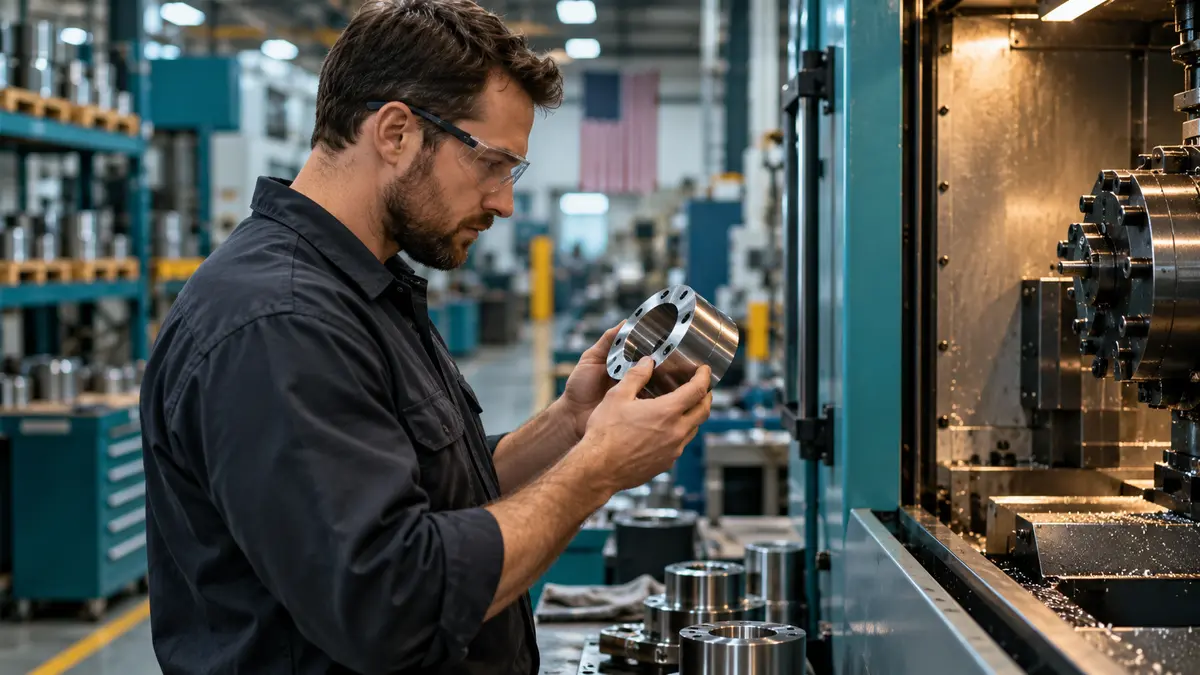
Yadro described a full production cycle including printed circuit boards. Internal board capability can shorten feedback, protect supply and connect design engineers directly to manufacturing problems.
It also adds sensitive processes: material storage, solder paste, component placement, thermal profiles, optical inspection, rework and contamination control. Yield depends on hundreds of parameters that must remain stable.
Vertical integration is valuable only when the internal process competes on quality, response and total cost. Owning equipment without utilisation, skills and statistical control can replace supplier dependency with factory underperformance.
The radio unit was one of the hardest industrial elements
Radio-frequency hardware combines electronics, power, heat management, shielding, connectors and precise signal performance. Small variation can affect output power, sensitivity or interference.
Production therefore needs specialised fixtures, chambers and measurement equipment. Test time can become the bottleneck even when assembly capacity appears ample.
Design for test is an economic capability. Accessible measurement points, automated routines and clear failure isolation reduce labour while increasing coverage. A product difficult to diagnose becomes expensive at both factory and field site.

Demand was shaped before the serial line started
Thousands of stations were planned for delivery by year-end to Vimpelcom, MegaFon and T2 under forward contracts signed in 2022. These commitments gave the manufacturer a demand anchor before mass production.
A forward contract can justify tooling, engineering and supplier capacity that a speculative forecast cannot. Its value depends on clear specifications, milestones, acceptance rules, price adjustment and responsibilities when technology or deployment schedules change.
The contract should not turn volume into an automatic entitlement. Operators need conforming equipment, while the manufacturer needs a controlled ramp. Delivery gates should follow verified readiness rather than a calendar that forces unproven units into the network.
Operator acceptance is a separate industrial stage
A factory pass confirms requirements under defined tests. An operator must also verify integration with its network management, transport, core systems, site power, antennas and operating procedures.
Laboratory interoperability, pilot clusters and limited commercial zones can reveal issues that a standalone test misses. Alarm handling, configuration, software upgrade and performance under mixed devices all matter.
Acceptance criteria should be agreed before the equipment arrives. Ambiguous success measures create repeated trials, delayed revenue and arguments over whether the product or network environment caused a result.
A successful demonstration was evidence, not nationwide proof
The reported BTS8100 demonstration completed voice calls using GSM and data transmission using LTE with commercially available subscriber devices. That result proved important functional integration.
It did not establish nationwide coverage, long-term reliability or performance in every band and traffic condition. Those claims require broader field evidence.
Demonstrations are most useful when they close a defined uncertainty and feed the next test plan. Marketing should preserve the boundary between what was observed and what remains to be validated.
Being 5G-ready created an option, not an operating service
The hardware platform was described as 5G-ready and supporting the necessary frequency ranges. Readiness can protect investment by allowing later software, module or network evolution.
The option has value only if interfaces, processing headroom, radio architecture and upgrade mechanisms remain controlled. A label without an executable migration path does not reduce future replacement cost.
Product management should define what readiness includes, what additional work is required and which parts may change. Operators can then compare lifecycle scenarios rather than rely on a broad promise.
Frequency variants multiply configuration risk
Support for several frequency bands expands addressable deployments but creates more hardware, filtering, calibration and inventory combinations. Complexity can grow faster than unit volume.
A modular design can share processing, enclosure and software while varying only the necessary radio elements. Commonality improves purchasing scale and field spares.
Configuration control must prevent the wrong unit, firmware or calibration file reaching a site. Serial identity should connect commercial order, factory build and network configuration.
Supplier qualification had to extend beyond availability
A component supplier may deliver samples successfully yet struggle with stable volume, change control or long-term support. Telecom products need parts that remain available and consistent across years.
Qualification should cover process capability, counterfeit prevention, traceability, cybersecurity exposure, financial resilience and notification of design or factory changes.
Dual sourcing can reduce interruption, but two nominally equivalent components still require validation. Diversity that creates uncontrolled variants can weaken reliability instead of strengthening it.
Yield determined the economics of scale
When volume rises, first-pass yield affects labour, test capacity, component loss and delivery. A small defect rate across thousands of complex units becomes a large rework queue.
Teams should track yield by process, supplier lot, product variant and failure mode. Aggregate yield can hide one deteriorating station until it blocks the entire line.
Corrective action must remove causes rather than repeatedly repair symptoms. The learning loop from test to design, supplier and work instruction is one of the factory's most valuable assets.
Capacity should be balanced around the slowest verification step
Placement machines may process boards faster than radio chambers can verify finished units. Final software loading, calibration or environmental cycling may set the true output.
Adding upstream equipment without relieving the bottleneck produces work in progress and longer lead times. Nameplate assembly capacity is not delivered station capacity.
Ramp planning needs equipment uptime, changeovers, engineering holds, retest and maintenance. A stable lower rate can create more accepted units than a volatile high-speed line.
Software configuration was part of manufactured identity
Modern base stations combine hardware with embedded software, security credentials and network configuration. The production process must load approved versions and prove integrity.
Version control should connect source release, build artifact, factory load and installed unit. Unauthorized or mistaken software can create a fleet-wide issue even when hardware is flawless.
Secure signing, controlled keys, audit logs and rollback procedures belong in industrial engineering. Cybersecurity is not an inspection added after assembly.
Field service defined lifecycle cost
A station operates outdoors across temperature, moisture, dust and power conditions. When it fails, site access and tower work can cost more than the replaced module.
Design should favour remote diagnosis, modular replacement, safe connectors and common spares. Mean time to repair is influenced before the first serial unit leaves the plant.
Warranty reserves need evidence from accelerated tests and early deployments. Underestimating field cost can make apparently profitable hardware uneconomic years later.
The ramp needed a controlled feedback architecture
Early field units should be treated as a learning cohort. Their alarms, performance, interventions and environmental conditions must return to product and factory teams.
A common defect taxonomy prevents service, engineering and production from naming the same problem differently. Priority should reflect network impact and affected population.
Changes then require verification before broad release. A fast fix without regression control can exchange one fault for another across thousands of sites.
The investment case depended on more than unit margin
A 50–70 billion ruble commitment covers capability developed across years. The return depends on volume, price, yield, component cost, test assets, support obligations and technology life.
Shared production with servers and storage may improve utilisation, but only where processes and equipment are genuinely common. Allocating shared cost mechanically can hide whether a product family creates value.
Scenario analysis should include slower operator rollout, specification changes, lower yield, component redesign and later technology generations. A strategic project still needs transparent economic gates.
Skills were a capacity constraint
Measurement systems, radio design, board production, embedded software and network integration require specialised engineers and technicians. Machines cannot substitute for absent diagnosis skill.
Training should connect classroom knowledge to certified tasks and observed performance. Cross-training reduces dependence on a few experts without weakening accountability.
Retention matters across the long payback horizon. Technical career paths, documented methods and design reviews preserve institutional knowledge when people change roles.
Governance had to align manufacturer and operators
Forward contracts created interdependence. Operators' deployment schedules affected factory volume, while factory readiness affected network plans.
A joint governance structure should review specification, test evidence, defects, supply risk, delivery, acceptance and change requests. Decisions need named owners and dates.
Commercial pressure should not override technical evidence, and technical teams should not keep acceptance criteria open indefinitely. Escalation works when both sides see the same configuration and facts.
Change control protects a fleet from silent divergence
Serial production rarely freezes every component for years. Suppliers discontinue parts, engineers correct defects, security requirements evolve and operators request functions. Each change can improve the product while also dividing the installed fleet into configurations that behave differently.
A change board should classify impact on radio performance, safety, software, manufacturing, certification, spares and field procedures. The decision needs affected serial numbers, validation evidence, deployment timing and a rollback path. Substitution based only on procurement availability can introduce a fleet problem that remains invisible until unusual traffic or weather exposes it.
Operators also need notice and compatibility information. A new hardware revision may require different software, tools or spares even when its external interface appears identical. Controlled configuration baselines let support teams diagnose the actual unit rather than an assumed generic model.
Industrial policy is strongest when demand and capability meet
Domestic telecom hardware can improve supply resilience and local engineering depth across Russia. Capacity alone does not guarantee adoption.
Demand commitments, interoperability rules, spectrum plans, financing and credible certification need to move on compatible calendars. A factory built before specifications settle carries redesign risk; demand promised without validated product creates network risk.
Support should reward accepted, reliable equipment and sustained capability rather than only installed machinery or announced volume.
Serial success means repeatable field performance
The journey from hundreds to thousands was not a multiplication exercise. It required stable suppliers, controlled boards, radio measurement, software integrity, operator acceptance and field feedback.
The factory was necessary because it created repeatable hardware. The wider operating system was necessary because a base station creates value only after reliable integration into a live network.
A practical industrialisation agenda
- Gate volume increases on measured process and field evidence.
- Trace every unit from component lot through software and acceptance.
- Balance capacity around testing and verification bottlenecks.
- Use forward contracts to align demand, change and acceptance.
- Measure lifecycle reliability alongside factory yield and delivery.
A strategic telecom investment earns its return when thousands of units behave like the proven first unit — not only on the line, but through installation, upgrades, weather, traffic and years of service.



















HOT NEWS INTERNATIONAL
Leave a comment