
 EN
EN RU
RU
Europe entered 2024 with an export paradox. Its companies still sold premium machinery, vehicles, chemicals, medicines and professional expertise around the world, yet the euro area's share of global manufactured-goods trade had been eroding for years. Services were expanding fast enough to cushion the weakness, but they could not be separated cleanly from the factories, freight and products they supported. The strategic task was therefore not to replace industry with an office economy. It was to rebuild a competitive system in which efficient production and high-value services reinforce each other.
A smaller share is not the same as no exports
On 1 October 2024, Expert examined Europe's shrinking position in world goods markets. Its account emphasised high costs, slow industrial adaptation and stronger competitors in the Global South. The direction was serious, but the meaning of market share needs care. A region can export more in absolute euros while losing share if global trade grows faster elsewhere. It can also preserve value by selling specialised, expensive products even when physical volume underperforms.
The distinction prevents two opposite mistakes. One is complacency: premium positioning cannot indefinitely offset lost scale, ageing product segments and a weak presence in fast-growing markets. The other is fatalism: a lower global share does not mean that every European plant is obsolete. Export performance differs by sector, destination, technology, energy intensity and position in the supply chain.
Competitiveness is therefore a portfolio of outcomes rather than a single league table. A medical-equipment producer may defend margin through certification and service. A commodity chemical plant may be overwhelmed by energy costs. A machinery group may lose unit volume but retain lucrative maintenance contracts. Management needs to know which effect is driving its own numbers before it copies a continental policy slogan.
The old model was built around complex goods
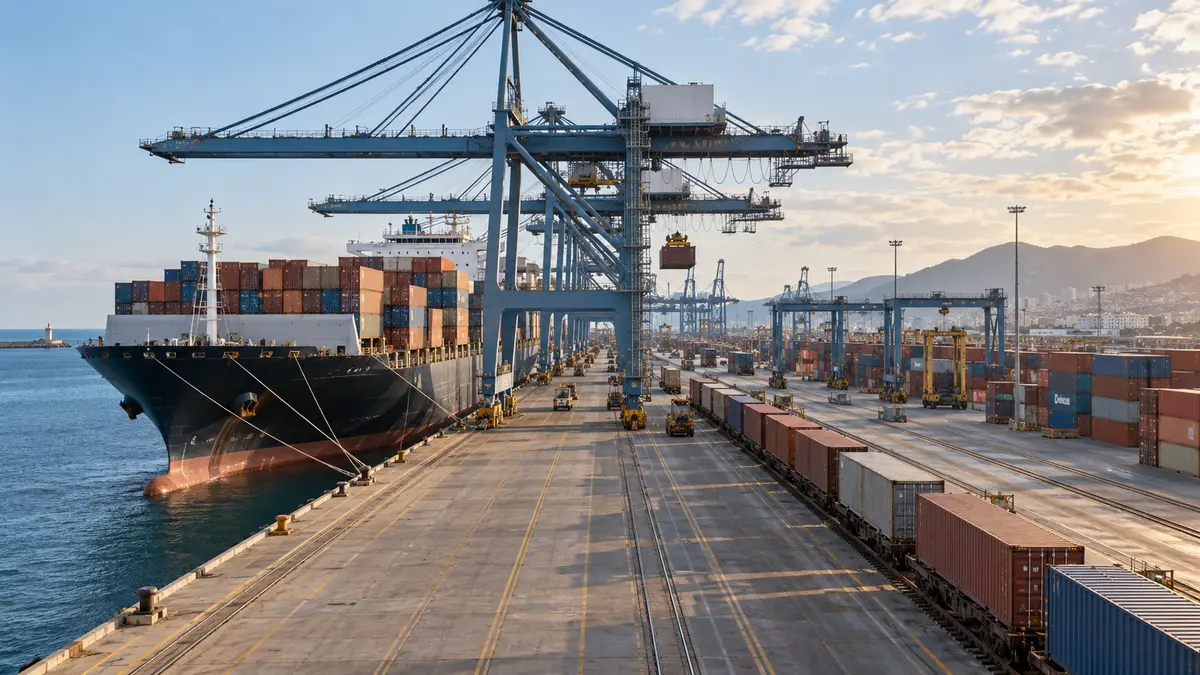
For decades, the euro area's export strength rested on engineering-intensive products, dense supplier networks and reputations for quality. Capital equipment, transport machinery, pharmaceuticals, chemicals and branded consumer products travelled with finance, insurance, logistics, installation and technical support. The system benefited from an integrated regional market and from customers willing to pay for durability and precision.
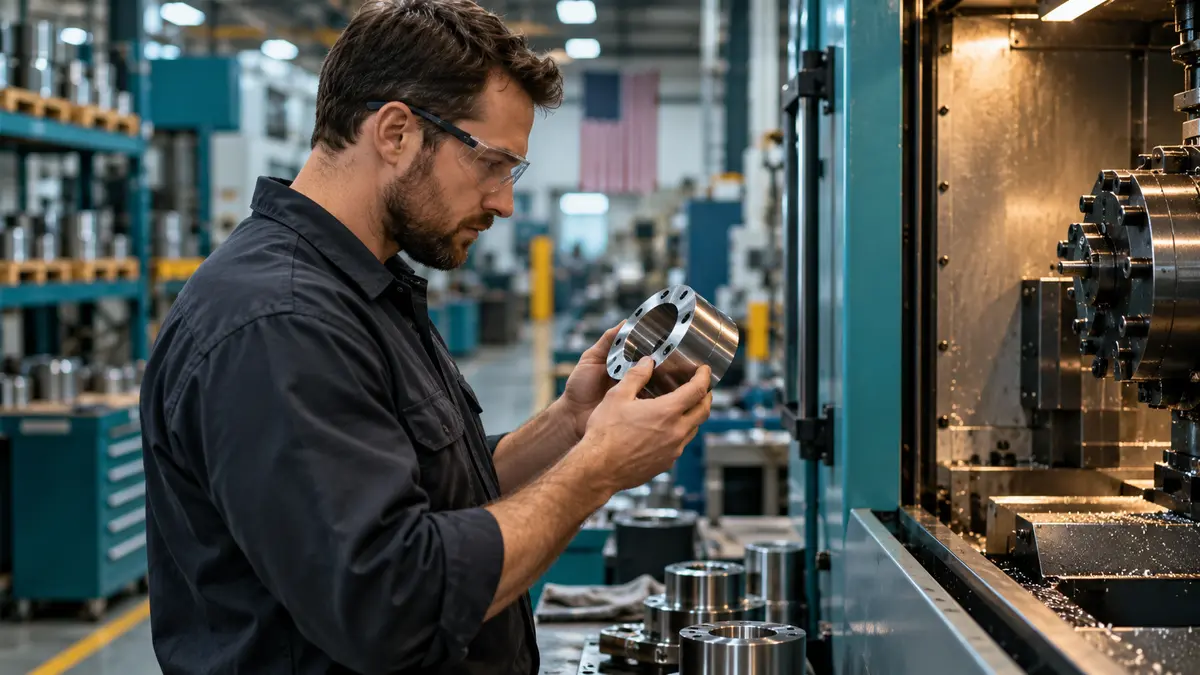
This model created durable advantages. Toolmakers learned from demanding industrial clients. Specialist suppliers could serve several manufacturers within a short distance. Apprenticeship and vocational systems accumulated tacit knowledge that was difficult to copy from drawings. Banks understood export finance, and ports connected inland industrial clusters with distant customers.
Its strength also created exposure. A portfolio concentrated in capital goods depends on investment cycles abroad. Complex production requires many inputs to arrive in sequence. Energy-intensive upstream materials affect costs throughout the chain. Premium prices require continuous proof that lifecycle value is better than a cheaper alternative. When global demand moved toward electronics and other categories produced more heavily elsewhere, yesterday's specialisation became a headwind.
The rise of China was particularly consequential because it changed both demand and supply. European manufacturers initially gained from selling equipment into a rapidly industrialising market. Over time, local producers learned, scaled and competed in third countries. The relationship evolved from customer and supplier to a more complicated combination of customer, production base, partner and rival.
The pandemic punished a tightly sequenced system
The pandemic did more than close factories temporarily. It changed what households and companies bought. Spending moved away from travel and services toward computers, home equipment and goods suited to remote life. Many of those categories were not the strongest part of the euro-area export mix. At the same time, lockdowns and logistics disruption delayed the investment goods and industrial inputs in which the region specialised.
A complex chain is efficient when every link is reliable. When ports congest, semiconductors disappear or a tier-two supplier stops, the final producer may be unable to ship a product containing thousands of available parts because one critical component is missing. High fixed costs then continue while revenue waits. Competitors with different product mixes or shorter regional chains can gain share even without a sudden improvement in product quality.
Recovery did not simply restore the old pattern. Buyers reviewed supplier concentration, carried more inventory and demanded shorter lead times. Governments attached security conditions to strategic goods. Companies duplicated selected suppliers and moved some assembly closer to customers. Those changes increased resilience, but they also raised the cost of a system previously optimised for scale and specialisation.
For European exporters, the challenge was asymmetric. Their industries were deeply connected to regional and global networks, so bottlenecks travelled quickly through them. The immediate disruption eventually faded, but some customers had already qualified alternatives. Market share lost during an emergency is not automatically recovered when freight schedules normalise.
The gas shock changed relative cost, not just the utility bill
The European Central Bank's 2024 analysis identified energy as a major reason goods exports remained weak after supply bottlenecks eased. At the height of the regional gas crisis in the third quarter of 2022, the European Union benchmark stood about 20 times its historical average and roughly ten times the benchmark in the United States. The shock was regional, so European costs rose relative to competitors rather than rising equally everywhere.
That difference travelled beyond a factory's gas invoice. Upstream producers of glass, metals, fertiliser, paper and basic chemicals passed higher input costs downstream. Some plants reduced output or paused. Customers faced higher quotations and uncertain delivery, while exporters outside the region could offer more predictable economics. A weaker currency cushioned part of the disadvantage, but it could not erase an extreme physical-energy differential.
ECB estimates showed why averages hide strategic danger. At the peak, the modelled adverse impact on euro-area export market share averaged 7%. For the most energy-intensive industries, the decline exceeded 15%, and for highly upstream operations it approached 20%. Plants near final demand experienced a smaller effect because earlier links sometimes absorbed part of the shock in their margins.
These estimates do not say that energy alone explains every lost order. Product mix, wages, exchange rates, innovation and customer geography all matter. They do show that position in the chain determines exposure. A board cannot manage energy risk using only group-wide consumption. It must map which facilities create irreplaceable inputs, which contracts allow repricing and where a shutdown would strand downstream capacity.

Price was only part of the competitiveness gap
Lower energy costs help, but a strategy based only on subsidies or cheaper power would be incomplete. Non-price competitiveness includes product relevance, delivery speed, software quality, design, after-sales support and the ability to tailor an offer to a customer's operating model. A premium machine remains attractive if it produces more, fails less and can be serviced quickly. It loses ground when the price premium survives but the operational advantage narrows.
European firms often carried product architectures designed for a slower era. Many variants, country-specific components and long approval chains made changes expensive. New competitors entered with fewer platforms, faster engineering loops and digital sales channels. They learned from field data, updated products frequently and accepted thinner early margins to build installed bases.
Demographics and investment rates matter too. A shrinking skilled workforce raises the value of automation but makes implementation harder. Fragmented capital markets can limit scale-up finance for young firms. Research strength creates patents, yet value migrates elsewhere if commercial production is delayed. Regulation can improve safety and trust, but inconsistent implementation across jurisdictions increases the fixed cost of serving the common market.
The right response is not to abandon standards. It is to make compliance predictable, digital and proportionate, and to shorten the distance from laboratory to factory. Competitiveness improves when a company can test, certify, finance and scale an innovation inside one coherent market before taking it abroad.
Services became a buffer
While goods struggled, service exports expanded. The ECB calculated that services rose from 24% of the total value of euro-area exports in 2000 to about 31% in 2023. In 2022 they accounted for two-thirds of annual growth in total export volumes. Travel rebounded after the pandemic, while digital delivery made software, professional advice, finance, communications and other knowledge-intensive work easier to sell across borders.
This performance offered genuine resilience. A consulting engagement or software subscription does not require a container for every delivery. Digital services are less directly exposed to a blocked port or a tonne of gas. They can scale across markets and generate recurring revenue. Europe also possesses strong institutions, multilingual talent, financial centres, tourism assets and technical expertise that support service trade.
Yet the apparent separation was unusual. Over the preceding 15 years, growth rates for goods and service exports had moved together with a correlation of roughly 0.6. Pandemic distortions and the travel rebound widened the gap. A business plan that extrapolated the exceptional divergence forever would confuse recovery with a permanent new structure.
Service categories also differ. Tourism, freight insurance, engineering design, cloud hosting and intellectual-property licensing have distinct customers, capital needs and exposure to cycles. Aggregating them under one label can conceal concentration as easily as aggregating all manufactured goods.
Why services cannot simply replace factories
The most important ECB finding was the connection between the two sides. Just under half of the euro area's value added in exported services was used as an intermediate input in goods production abroad. Transport, trade-related services and freight insurance represented more than 20% of service exports. Manufacturers themselves bundled maintenance, software, financing and technical assistance with equipment.
If the industrial base contracts indiscriminately, part of the service base loses its anchor. Fewer machines made and installed mean fewer maintenance contracts, less production software, less export finance and less specialised logistics. Design knowledge can weaken when engineers no longer work beside manufacturing. Supplier ecosystems thin out, making the next physical innovation harder to commercialise.
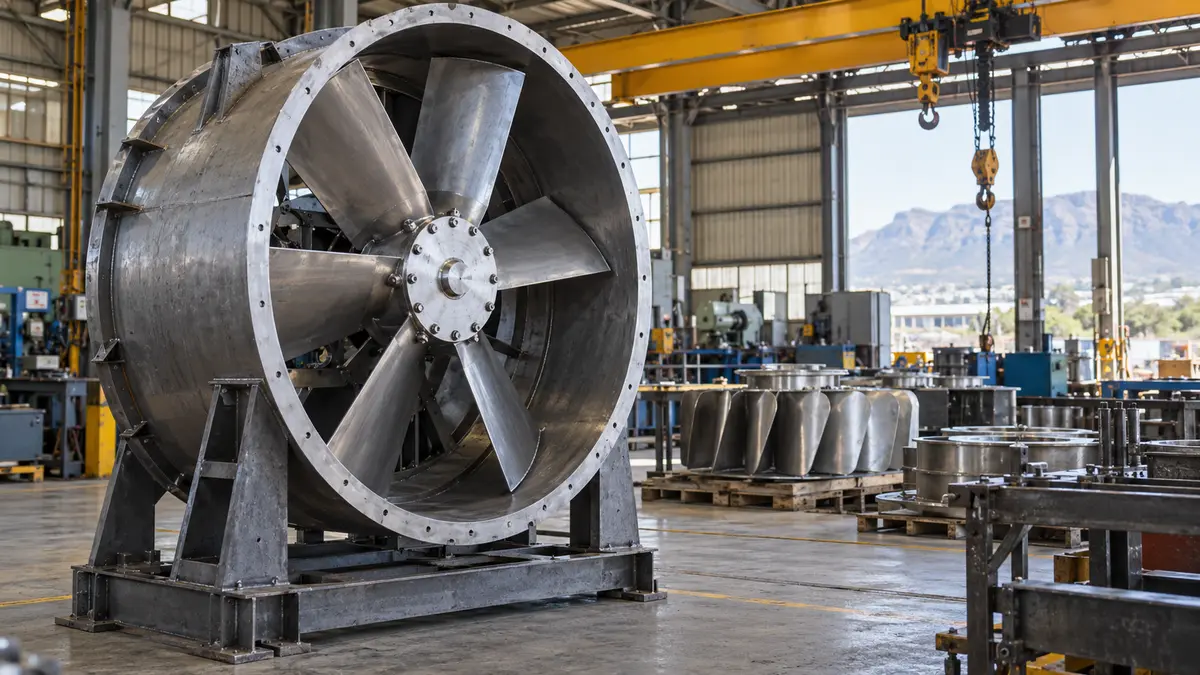
The reverse is also true: services can make factories more competitive. Predictive maintenance lowers downtime. Digital twins reduce commissioning risk. Financing turns a large upfront purchase into an operating payment. Remote support expands the market a field team can cover. Performance contracts allow a manufacturer to sell output, uptime or energy savings rather than a box of equipment.
Four industrial-service models with defensible value
- Installed-base services: parts, maintenance, upgrades and training built around equipment already operating at customer sites.
- Outcome contracts: payment linked to availability, throughput, quality or energy efficiency rather than ownership alone.
- Embedded software: control, optimisation and compliance tools that improve the physical product throughout its life.
- Lifecycle finance: leasing, insurance and resale systems that reduce adoption risk and preserve residual value.
Each model requires reliable hardware. A recurring service promise is valuable only if the underlying product performs and the provider can supply parts. The winning unit is therefore not factory or service. It is a lifecycle system that begins with design, survives production and earns trust during years of use.
The Draghi diagnosis raised the scale of the response
The European Commission's page for the 2024 Draghi report summarised the pressures as slowing productivity, demographic constraints, high energy costs and stronger global competition, combined with large investment needs for digital and green transitions. The diagnosis implied that isolated factory grants would not be enough. Energy, capital, skills, research and market scale had to work together.
For business, the important message was coordination. A low-carbon plant is not competitive if grid connection takes years. A promising technology does not scale if growth finance is fragmented. Training does not create productivity if equipment investment stalls. A common market does not deliver scale when procurement, tax and data rules are interpreted differently across borders.
Large policy estimates can tempt firms to wait for public money. That is dangerous. Subsidies may alter where an investment is built, but they cannot create customers, operational discipline or a differentiated offer. Management must develop projects that remain commercially coherent under several energy-price, demand and support scenarios.
A company playbook for the export squeeze
Executives need a granular exposure map. Revenue should be divided by destination, product family, energy intensity, service attachment and customer switching risk. Plants should be mapped by their position in the value chain and by how quickly production can move. Contracts need analysis for currency, energy and raw-material pass-through. The objective is to replace one continental narrative with decisions at the level where cash is earned.
Second, the portfolio should distinguish products worth defending from complexity that merely consumes scale. A business may consolidate platforms while expanding software options. It may standardise hidden components and preserve visible customisation. It may retire a low-volume line whose service obligations absorb engineers needed elsewhere. Simplification is not retreat when it funds faster innovation.
Third, energy becomes a design variable. Procurement, efficiency, electrification, heat recovery, storage and location belong in product strategy because energy cost affects the price a global customer sees. Investment should be judged against several price paths and include the value of reduced volatility, not just an optimistic payback at today's tariff.
Fourth, every exportable product needs a service thesis. Management should ask which customer problem continues after delivery, what data can be used with permission, how support reduces lifecycle cost and whether payment can reflect outcomes. The service should deepen the product advantage rather than compensate for mediocre hardware.
Finally, localisation should follow economics rather than fashion. Producing closer to demand can reduce freight, tariffs and lead time, but it can also fragment scale and duplicate overhead. Companies need a deliberate network: centres that protect core process knowledge, regional plants that adapt products and partners that extend service without surrendering critical customer insight.
Measure value, volume and resilience separately
A single export-sales line cannot show whether strategy is working. Boards should watch physical volume, realised price, gross margin, order lead time, on-time delivery and share in targeted customer segments. Service attachment, recurring revenue, renewal, equipment uptime and installed-base penetration reveal whether lifecycle models are becoming real.
Resilience requires its own measures: supplier concentration, energy exposure, time to qualify an alternative, inventory at risk and recovery time after a disruption. Innovation metrics should follow time from prototype to certified production, not only patents or research spending. Workforce measures should track scarce skills by facility and succession risk.
These indicators sometimes conflict. More inventory improves delivery resilience but consumes cash. Local production reduces border risk but can lower utilisation. Premium prices support margin but slow volume. Explicit trade-offs are healthier than claiming that every initiative simultaneously improves cost, growth and security.
Europe's export future is a combined system
The 2024 export squeeze exposed weaknesses accumulated over decades and amplified by unusual shocks. Emerging economies gained weight, demand shifted, supply chains seized and regional energy prices damaged cost competitiveness. Services provided a powerful buffer, but the data also showed how deeply they remained connected to physical trade.
Europe therefore faced a more demanding choice than factories versus services. It needed factories that consumed less energy, changed products faster and used scale more intelligently. It needed services that converted technical knowledge into recurring customer value. It needed capital, grids, skills and rules capable of supporting both.
For an individual company, the route begins without a grand slogan: know where margin is made, remove complexity, protect the distinctive process, attach useful services and build options before the next shock. Market share will still move as the world grows. The meaningful test is whether the business can win chosen customers at a return that finances the next generation of products and expertise. That is how a mature export model changes without pretending its industrial foundations no longer matter.



















HOT NEWS INTERNATIONAL
Leave a comment