
 EN
EN RU
RU
The most efficient warehouse may not be the one with the fewest people. Research discussed by Harvard Business Review suggests that logistics operations perform better when robotics and human labour are combined than when managers pursue full automation alone. The finding shifts the investment question from how many jobs a machine can remove to how work should be divided between predictable movement and judgement-heavy exceptions.
Harvard Business Review published the research by René de Koster and Debjit Roy on 21 June 2024. Its accessible summary describes a study of automation use among warehouse and logistics companies around the world. It does not disclose enough methodological detail to support invented productivity percentages, sample sizes or claims about particular operators.
The useful comparison is task against task
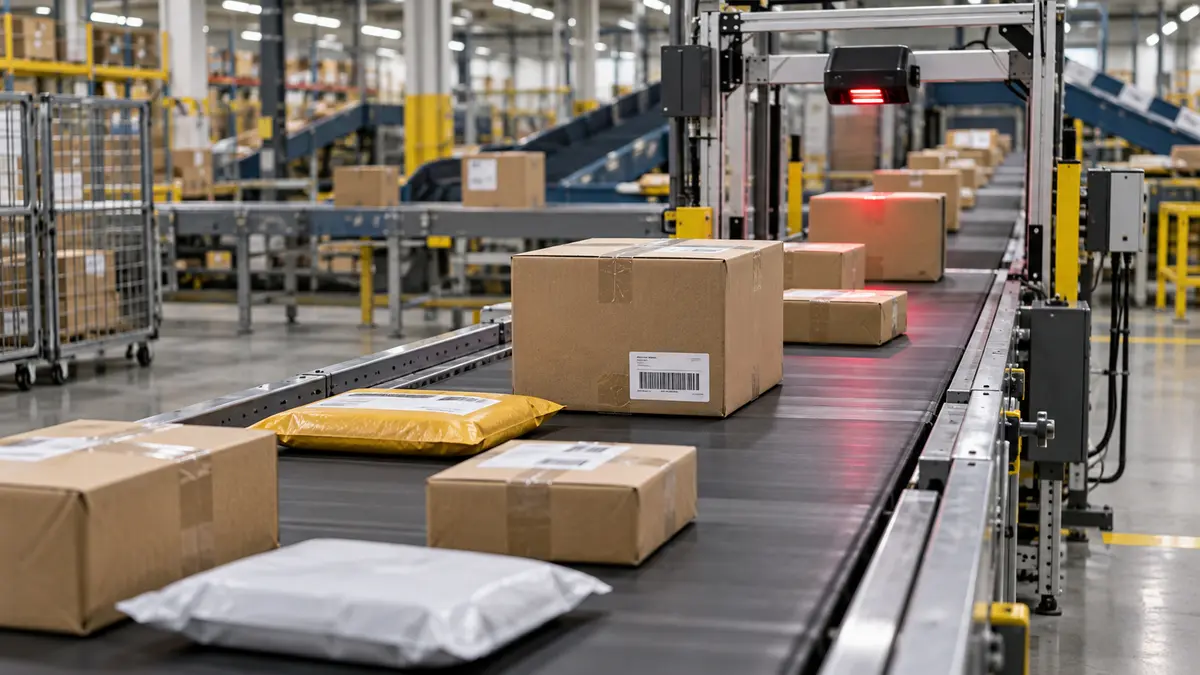
A warehouse contains very different kinds of work. Moving a standard tote along a mapped aisle, carrying a pallet between fixed points and repeating a known sort can suit machines. Damaged packaging, an unexpected object, a blocked route or an ambiguous order may demand perception, dexterity and a decision that was not specified in advance.
Full automation can look attractive when every item and movement follows a stable pattern. Real operations face promotions, seasonal peaks, returns, supplier variation and layout changes. A mixed system keeps machines on repeatable flows while people handle exceptions, improvement and quality. The value comes from matching capabilities, not from maximising either headcount or robot count in isolation.
A practical division of warehouse work
- robots can transport standard loads and repeat mapped movements consistently;
- people can inspect unusual items, resolve incomplete information and adapt priorities;
- software can sequence orders while supervisors manage capacity and service trade-offs;
- shared safety rules can coordinate paths, hand-offs and recovery after disruption.
Rapid market growth does not settle the design
HBR cited a Statista forecast that worldwide revenue from robotics automation in warehouses and distribution could rise from $7.91 billion in 2021 to more than $51 billion by 2030. Those numbers are a forecast quoted by the publication, not realised revenue or a guaranteed trajectory. They nevertheless show why operators and technology suppliers are treating the subject as a major capital market.
Spending more does not automatically produce a better operation. A robot fleet may reduce walking but create new requirements for charging, maintenance, mapping, software integration and recovery procedures. Fixed equipment can also make a building harder to reconfigure. Investment cases should include the cost of the supporting system and the value of flexibility, not only labour minutes removed from one task.

Human involvement needs deliberate engineering
Keeping people in a facility is not itself a collaboration strategy. Poorly designed systems can leave workers waiting for machines, crossing robot lanes or following a rigid pace that transfers variability into physical strain. The operating design needs clear hand-off points, reachable controls, safe separation where necessary and an easy way to stop or reroute work.
Training also changes. Workers need to understand what the automation can sense, where it fails and how to report recurring exceptions. Maintenance and operations teams need a common view of downtime. Managers should treat frontline observations as input to system improvement because the people resolving edge cases see where product data, packaging and process rules break down.
The researchers connect two operating traditions
René de Koster is a professor of logistics and operations management at Rotterdam School of Management, Erasmus University in the Netherlands. Debjit Roy is a professor in operations and decision sciences at the Indian Institute of Management Ahmedabad in India. Their conclusion places technology design beside operations management rather than treating automation as a simple equipment purchase.
This matters for vendors as well as warehouse owners. Customers need systems that integrate with people, buildings and existing software. Products that work only in tightly controlled demonstrations may struggle when order profiles change. The strongest commercial offer can therefore include implementation, training, analytics, maintenance and process redesign around the hardware.
Efficiency should include resilience and service
Managers can evaluate a mixed system through throughput, error rates, injury exposure, downtime, recovery time, energy use and the ability to absorb a different product mix. A narrow cost-per-pick measure may hide a fragile process that performs well only under normal conditions. Service outcomes matter too: a faster line has limited value if exceptions create late or incorrect orders.
The HBR research summary does not mean every warehouse needs the same ratio of people to robots. It supports a more useful principle: automate work whose conditions and value justify automation, then engineer the surrounding human roles with equal care. In a variable logistics network, adaptability is a productive asset rather than evidence that automation is incomplete.
















HOT NEWS INTERNATIONAL
Leave a comment