
 EN
EN RU
RUVulcan Elements and ReElement Technologies have assembled a $1.4 billion public-private package to build an American rare-earth magnet chain. The headline joins several conditional loans, private matches and an equity-linked federal incentive rather than awarding one company a single pot of cash.
The partnership was announced on 3 November 2025 and covered by The Wall Street Journal the following day. Vulcan makes permanent magnets; ReElement works on separation, purification and recycling. Together they aim to connect material processing with annual capacity for 10,000 metric tonnes of magnets in the United States.
The $1.4 billion headline contains four different pools
The largest public component is a proposed $620 million loan to Vulcan from the Pentagon's Office of Strategic Capital. Private investors are expected to supply another $550 million to the magnet maker. The Commerce Department separately proposed $50 million of support, connected to an equity interest rather than structured as ordinary debt.
ReElement's side is smaller but essential to the chain: an $80 million conditional loan accompanied by matching private capital. Rounded together, the loans, incentives and private commitments produce the $1.4 billion description. They do not all have the same recipient, conditions, repayment profile or risk.

Why the financing labels matter
- a loan supplies capital but normally carries repayment and performance obligations;
- private matching tests whether investors will share execution risk;
- equity and warrants may give the public sector upside if enterprise value grows;
- conditional commitments can change before legal closing and drawdown;
- factory capacity is not operating output until equipment is commissioned and qualified.
Two startups cover different links in the chain
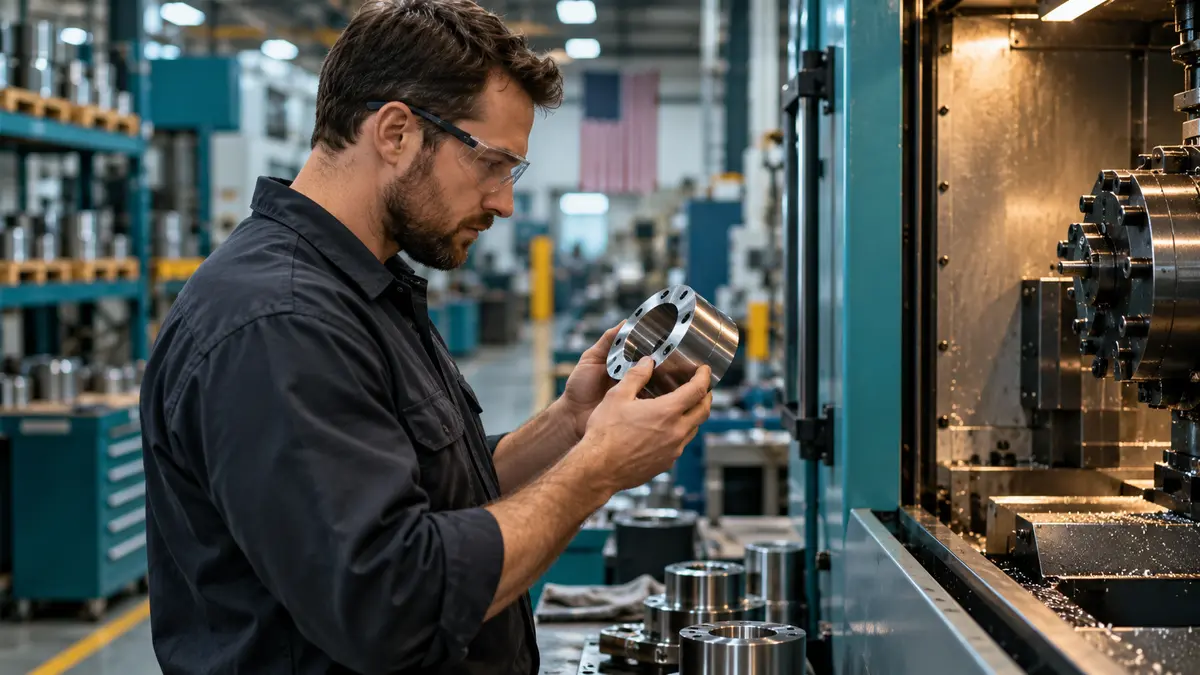
Rare-earth supply is often discussed as though opening a mine solves the problem. A usable permanent magnet needs several additional steps. Mixed material must be separated into individual elements and purified; metals and alloys must be prepared to specification; powder must be formed, sintered, machined, coated and magnetised.
ReElement addresses the middle of that sequence using feedstocks that can include mined material and recycled products. Vulcan operates farther downstream, turning suitable material into magnets. Their commercial relationship is meant to give the magnet plant a domestic processing route instead of merely relocating the final shaping step.

The 10,000-tonne figure is a target, not current production
The companies describe capacity for 10,000 metric tonnes of magnets a year. That target indicates intended equipment scale, but it is not evidence of present shipments. Construction, tooling, material qualification, customer testing and production ramp-up must occur before nameplate capacity becomes saleable volume.
Permanent magnets can differ by composition, geometry, coating, temperature tolerance and magnetic performance. A plant capable of a stated mass cannot automatically serve every motor, data-centre system or defence application. Customers qualify specific components, and demanding uses can require long evidence trails.
Public capital is buying speed and optionality
The United States has treated rare-earth magnets as both an industrial and national-security dependency. Motors using high-performance permanent magnets appear in vehicles, electronics, data-centre equipment, aircraft, drones and other defence systems. A disruption can therefore cross several markets at once.
Government lending can accelerate capacity that private finance considers too early, capital-intensive or exposed to volatile prices. Warrants and equity attempt to retain some public upside. Neither device removes execution risk: taxpayers and investors still depend on the companies building competitive plants and finding durable demand.
China remains the benchmark the new chain must compete with
The project is based in the United States, where policy is encouraging domestic processing and manufacturing. Its strategic context is the established scale of China across rare-earth separation and magnet production.
Domestic origin does not by itself guarantee resilience. The chain also needs diversified feedstock, cost control, environmental permitting, skilled operators, reliable yields and customers willing to qualify a new supplier. If one intermediate step remains concentrated abroad, the final factory can still inherit the same bottleneck.
Evidence to watch after the announcement
- final loan agreements, private matches and the terms of warrants or equity;
- named sites, permits, equipment orders and construction milestones;
- qualified sources for separated oxides, metals and alloys;
- production yield and magnetic-performance data by product family;
- customer qualifications and binding purchase commitments;
- actual annual shipments compared with the 10,000-tonne design target.
A complete chain is harder than a large financing round
The partnership is notable because it funds connected midstream and downstream capabilities rather than announcing an isolated factory. ReElement's processing role and Vulcan's magnet-making role are complementary, while public and private capital distribute risk across several instruments.
The structure also makes careful reporting necessary. The $1.4 billion is a package, the 10,000 tonnes are planned capacity, and the government support is not a no-strings grant. Success will be visible when conditional money becomes qualified equipment, domestic material becomes reliable magnets and customers take repeat deliveries at competitive cost.

















HOT NEWS INTERNATIONAL
Leave a comment