
 EN
EN RU
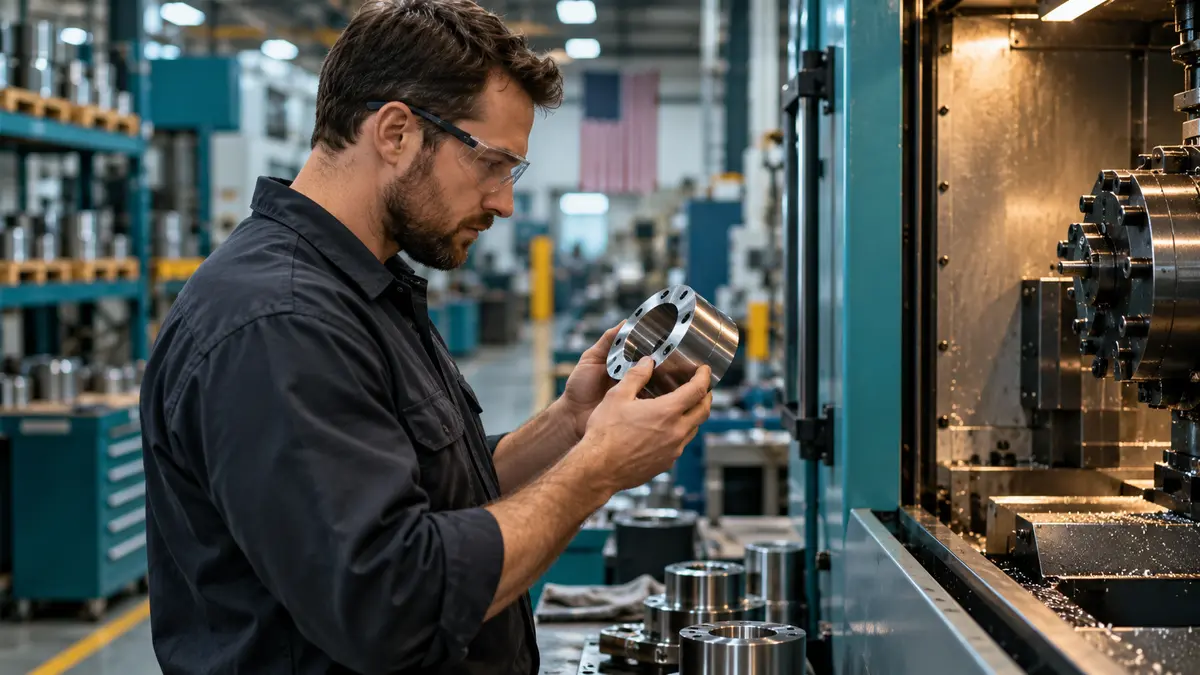
RUA steelmaker normally buys machinery from a specialist and concentrates on metal. That boundary becomes less convincing when imported spares are expensive, delivery is uncertain and a stopped mill loses more value than the component that caused the outage. In 2025, several Russian steel producers were building machinery capabilities of their own. The strategic question was not whether they could copy a part, but whether captive demand, engineering knowledge and disciplined qualification could support a durable machine-building business.
The announcement described a portfolio, not one completed programme
On 29 January 2025, Kommersant reported machinery projects at Severstal, MMK and Evraz, while its sources said NLMK had also started producing spare parts. The companies were at different stages. Some capacity was already operating, while other products and workshops were planned for later in the year.
Severstal expected its machine-building centre to begin making a rail mixer for transporting liquid pig iron. It already produced crusher hammers, loader-bucket teeth, blast-furnace chutes, mining-truck bodies and other structures that had previously been imported. The company did not disclose investment in the mixer project.
MMK planned a summer launch for one of three machine-building projects carrying combined investment of 30 billion rubles. The portfolio included forged work rolls, backup rolls, large forgings and steel support rolls. The combined figure must not be assigned to a single workshop or product.
Evraz said roll production launched in 2023 covered the annual requirements of its operating equipment. NLMK declined to comment on the spare-parts production described by the newspaper's sources. An operating line, an announced launch and an unattributed report provide different evidence.

The outage changed the make-or-buy equation
A purchasing comparison often starts with unit price. For a critical spare, that is incomplete. The buyer also carries lead time, currency exposure, freight, customs, minimum order quantities, supplier concentration and the probability that an exact replacement will become unavailable.
The article linked the push to supply and repair difficulties after 2022. An industry source said 80–85% of metalworking and metallurgical equipment was priced in foreign currency. That statement described exposure, not proof that the same share of every plant's installed base was imported.
A stopped furnace, rolling stand or mine can make waiting much more expensive than the part. Internal production creates an option: engineering can begin from drawings, measurements and operating history before an external route is exhausted. That option belongs in the make-or-buy calculation.
Yet self-supply is not automatically cheaper. Presses, furnaces, machine tools, metrology, laboratories and skilled labour require fixed capital. Low utilisation can turn supply security into an expensive idle workshop. The decision must compare lifecycle economics under several demand and disruption scenarios.
Captive demand was the first customer
Steel groups possess something an independent machinery startup struggles to acquire: a visible installed base. Maintenance plans, failure records and scheduled overhauls can create a baseline order book before the first external sale.
That demand is valuable only when translated into a product plan. Emergency requests tend to be irregular and customised. A workshop that accepts every drawing can become a job shop with long queues, poor repetition and no learning curve.
Managers need to group demand into families: rolls by geometry and duty, wear parts by material and interface, forgings by process route, and structures by welding and inspection class. Common tooling, heat-treatment recipes and measurement plans then create repeatability across different items.
The internal customer should still behave like a customer. It needs a specification, promised date, acceptance criteria and cost. Free transfers hide late delivery and poor quality; artificial monopoly removes pressure to improve.
Operating data became a design advantage
An equipment owner sees how parts fail. It knows where wear accelerates, which loads differ from assumptions, how operators handle the machine and which repair consumes the longest outage window. This feedback can shorten redesign cycles.
The advantage disappears when maintenance data remains in disconnected logs. Failure codes, photographs, material certificates, operating hours and removed-part measurements need a common identity linked to the asset and drawing revision.
Engineers can then distinguish a design weakness from installation error, abnormal operation or inconsistent material. Without that distinction, reverse engineering merely reproduces the geometry of a failed component.
A disciplined feedback loop
- Record the duty cycle and failure mode before removing the component.
- Preserve dimensions, material condition and fracture evidence.
- Connect the finding to a controlled drawing and process revision.
- Qualify the revised item under a defined operating envelope.
- Compare life, downtime and total cost with the previous solution.
Reverse engineering was a method, not a shortcut
A source cited reverse engineering and additive manufacturing as routes for replenishing parts and tools. Both can reduce dependence, but neither removes engineering responsibility.
Measuring an existing component captures its current shape, including wear and prior repair. It may not reveal original tolerances, residual stresses, heat treatment or surface requirements. A replacement should be derived from function, loads and interfaces, not from a scan alone.
Material selection is equally important. A nominal chemical match can behave differently after forging, casting or heat treatment. Qualification needs mechanical properties, microstructure, hardness distribution, non-destructive testing and traceability to the batch.
Additive manufacturing is useful for selected geometries, low volumes, patterns, tooling and fast iteration. It is not a universal substitute for forged or cast heavy components. Size, fatigue, anisotropy, post-processing and inspection determine whether it is appropriate.
Rolls exposed the depth of the capability stack
A rolling-mill roll looks simple, but performance depends on steelmaking, forging, heat treatment, machining, surface finish and non-destructive inspection. Working and backup rolls face different contact stresses and thermal conditions.
Large forgings require control from ingot quality through deformation and cooling. Defects hidden inside the section can survive until service. The producer therefore needs process models, qualified equipment and inspection capacity sized for the component, not merely a large lathe.
The economic unit is not a delivered tonne. Customers value predictable campaign life, surface quality and planned roll changes. A heavier or cheaper roll can be worse if it increases unplanned stops or damages strip quality.
The rail mixer tested system integration
A vessel for carrying liquid pig iron by rail combines refractory behaviour, thermal losses, shell integrity, bogies, braking, loading interfaces and safe maintenance. It crosses metallurgy, transport equipment and plant logistics.
The product must fit the customer's route: furnace dispatch, rail clearances, travel time, receiving capacity and contingency handling. A mechanically sound vessel can still fail commercially if it does not fit the operating timetable.
This makes the first unit a learning platform, not proof of serial readiness. Trials should establish heat retention, structural condition, refractory life, turnaround and safe recovery from delays before volume grows.
Quality independence protected the internal customer
Vertical integration creates a governance risk. The same group may design the part, manufacture it, approve it and absorb failure. Pressure to meet an internal launch date can weaken challenge.
Critical products need an acceptance authority independent of workshop targets. It should control specifications, witness tests, approve deviations and retain the right to reject an internal item.
External benchmarks should remain available. Competitive tenders, reference suppliers and periodic cost comparisons prevent the internal shop from confusing strategic importance with entitlement.

Investment needed gates rather than one headline
The Industrial Development Fund said it had provided 8.6 billion rubles of concessional loans to ten similar projects with total investment of 20 billion rubles. An analyst estimated in-house repair shops at 3–10 billion rubles. These were programme and estimate figures, not spending disclosed by every named steelmaker.
Capital should follow evidence. A project can start with demand mapping and outsourced trials, proceed to pilot equipment and qualification, then add serial capacity when repeat demand and performance are visible.
Useful gates include:
- a verified shortage or lifecycle-cost problem;
- a controlled specification and responsible product owner;
- a credible annual load across internal plants;
- successful prototype and field qualification;
- supplier and workforce readiness for repeat production;
- a route to external revenue or strategic standby value.
Staging does not eliminate risk. It makes uncertainty visible before the full workshop is committed.
The constraint could move to skills
Buying a machine tool is faster than building a team that understands metallurgy, design, controls, measurement and field service. Senior specialists become a bottleneck when several projects need the same judgement.
A capability map should identify scarce roles, authorised decisions and succession risk. Training should combine classroom knowledge with supervised production, failure analysis and customer acceptance.
Universities and engineering firms can expand capacity, but the owner must retain configuration control and operating knowledge. Outsourcing analysis while losing the rationale behind a drawing recreates dependency in another form.
The supplier ecosystem still mattered
Vertical integration does not mean producing every bearing, sensor, alloy, control or cutting tool. It changes which layers the steelmaker chooses to own.
The most defensible core is often system knowledge: product architecture, critical materials and processes, acceptance evidence and field feedback. Competitive suppliers can serve standard components and specialised operations where they have better scale.
Small suppliers need stable specifications and realistic payment terms. A dominant customer that changes drawings late or stretches receivables can destroy the ecosystem needed for resilience.
External sales required a different operating model
Captive demand can justify initial capability, but an internal workshop does not automatically become a competitive supplier. Outside customers expect quotation speed, documentation, warranties, service, confidentiality and delivery discipline.
The article noted concern about the limited Russian market for non-metallurgical machinery and machine tools, while an analyst saw export potential in friendly countries. Potential is not an order book.
External growth should begin where the producer has reference performance and a service advantage: metallurgical rolls, wear parts, large forgings or transport equipment close to its own experience. Entering unrelated machinery merely to fill capacity can dilute engineering attention.
For businesses in Russia, regional customers may value shorter lead times and accessible service, but they will still compare reliability and lifecycle cost. Origin alone is not a product proposition.
Transfer pricing could reveal or conceal value
An internal component can appear cheap when capital, engineering or warranty cost sits elsewhere in the group. It can appear expensive when a new workshop carries depreciation before reaching stable utilisation.
Management needs a transparent bridge from material and conversion cost to avoided downtime, reduced inventory, longer service life and external margin. Both workshop and plant should see the same assumptions.
Strategic standby capacity also has value, but it should be named. A deliberately underused machine that protects recovery from severe disruption is an insurance asset, not evidence of normal efficiency.
Inventory policy had to change with local production
Shorter manufacturing lead time can reduce finished-spare inventory, but materials, forgings and work in progress still consume cash. A local workshop with unstable schedules may simply replace imported stock with internal queues.
Parts should be segmented by failure consequence, demand predictability and production lead time. Some justify finished safety stock; others can use semifinished blanks, reserved machine slots or validated digital definitions.
The correct measure is service availability at acceptable total working capital, not the number of items labelled local.
A compact dashboard could keep the strategy honest
Revenue and tonnes are insufficient because they reward volume without revealing reliability. Management should connect engineering, production and field results.
- Share of critical demand covered by qualified products.
- Prototype-to-qualification lead time and first-pass acceptance.
- On-time delivery to planned outage windows.
- Campaign life and failure rate against the reference part.
- Machine, furnace and test-equipment utilisation by family.
- Avoided downtime, inventory released and lifecycle cost variance.
- External backlog, repeat orders and warranty cost.
No single measure proves success. High utilisation can hide late critical parts; localisation share can rise while lifecycle cost worsens.
The strategic test was repeatable independence
The January 2025 report showed steelmakers responding to a fragile equipment market with internal machinery portfolios. It did not prove that every launch, product or export ambition had already succeeded.
The durable advantage would come from joining captive demand to controlled designs, qualified processes, independent acceptance and field learning. A workshop that only copies emergency parts remains reactive. A workshop that turns operating evidence into repeatable products becomes an industrial capability.
Vertical integration is justified neither by pride nor by the wish to own every process. It earns its place when the group can deliver a critical result more reliably, learn faster from use and preserve competitive discipline while doing so.


















HOT NEWS INTERNATIONAL
Leave a comment