
 EN
EN RU
RU
Import substitution sounds like a purchasing decision: replace an unavailable foreign component with a domestic one. The industrial reality is harder. A country needs designs, machine tools, materials, certification, suppliers, trained workers and enough repeat orders to support a production line. In January 2024, Russia and Belarus said twenty-seven joint industrial programmes had been approved under a credit-backed cooperation framework. Their significance lay not in the number alone, but in a practical test: whether two manufacturing systems could divide complex work, finance new capacity and deliver reliable products at scale.
Twenty-seven approvals marked expansion, not completion
On 28 January 2024, Prime reported that Russian and Belarusian agencies had approved twenty-seven industrial import-substitution programmes for implementation in Belarus. Belarusian Deputy Prime Minister Petr Parkhomchik said the list had grown from an earlier group of sixteen and that the process was continuing.
The article connected the programmes with an interstate credit agreement signed in November 2022. The framework provided up to 105 billion Russian rubles for import-substitution projects. Twelve cooperation projects had initially been selected for financing, after which additional proposals were prepared.
These figures require careful interpretation. An approved programme is not necessarily a commissioned factory. A credit ceiling is not the same as cash already spent. Between approval and serial output lie engineering, procurement, construction, testing, customer qualification and ramp-up. The twenty-seven programmes therefore represented a pipeline and a governance commitment, not proof that twenty-seven new production systems were already operating at design capacity.
That distinction matters for managers and policymakers. Announcements measure intent. Industrial success must be measured through equipment installed, components qualified, volumes delivered, defects controlled and customers served without emergency imports.
Why bilateral cooperation could work
Russia brought a large industrial market, major transport, energy and machinery customers, research organisations and a broad supplier base. Belarus brought concentrated machine-building capabilities, experienced plants, engineering schools and established links to Russian customers.
The two economies already shared standards, transport connections and long supplier relationships. Those conditions reduce some of the transaction costs faced by a new international production network. Engineers can discuss familiar specifications, factories can ship by rail or road, and customers understand the operating history of neighbouring plants.
Cooperation also allows specialisation. It is inefficient for every country or corporate group to reproduce every casting, bearing, control unit and test bench. A joint programme can assign work to the plant with the strongest capability, while the customer receives an integrated product.
But proximity is not a guarantee. A politically supported supplier still has to meet tolerance, durability, delivery and cost requirements. If cooperation protects weak performance indefinitely, it turns resilience into an expensive dependency of another kind.
The gearbox example shows what localisation really demands
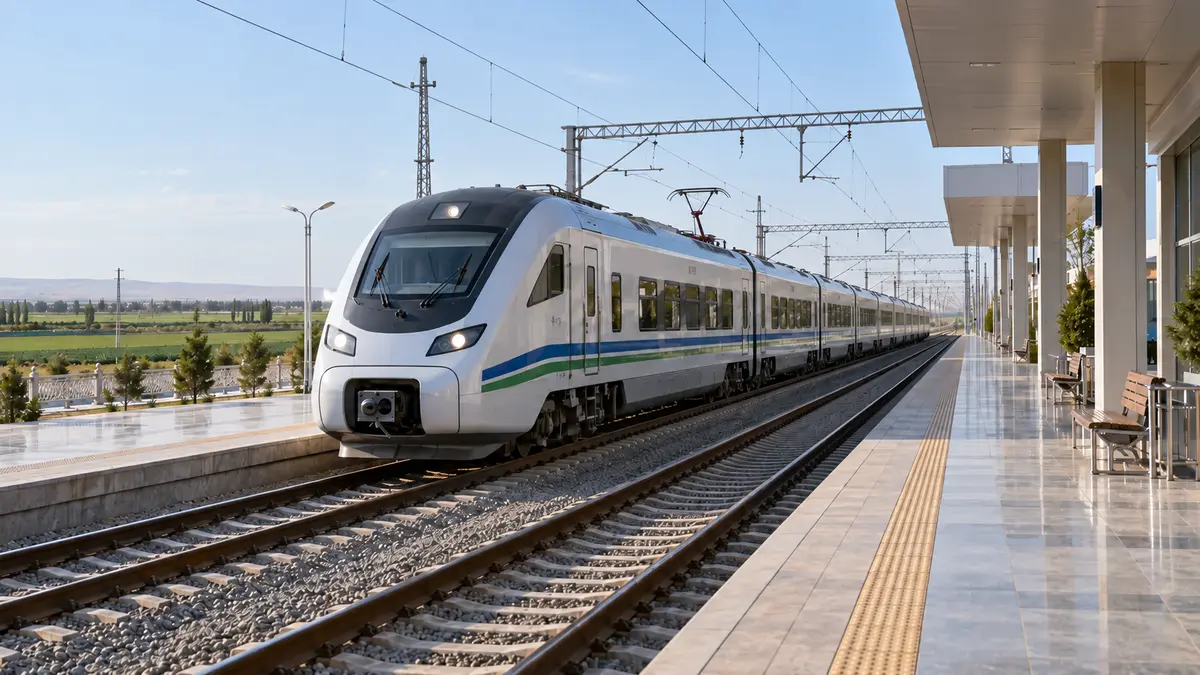
Parkhomchik described discussions with Transmashholding about high-speed gearboxes used in trams and passenger vehicles. The request was to establish capacity in Belarus that could serve demand in both countries. The example is useful because a gearbox looks compact but contains a dense set of industrial capabilities.
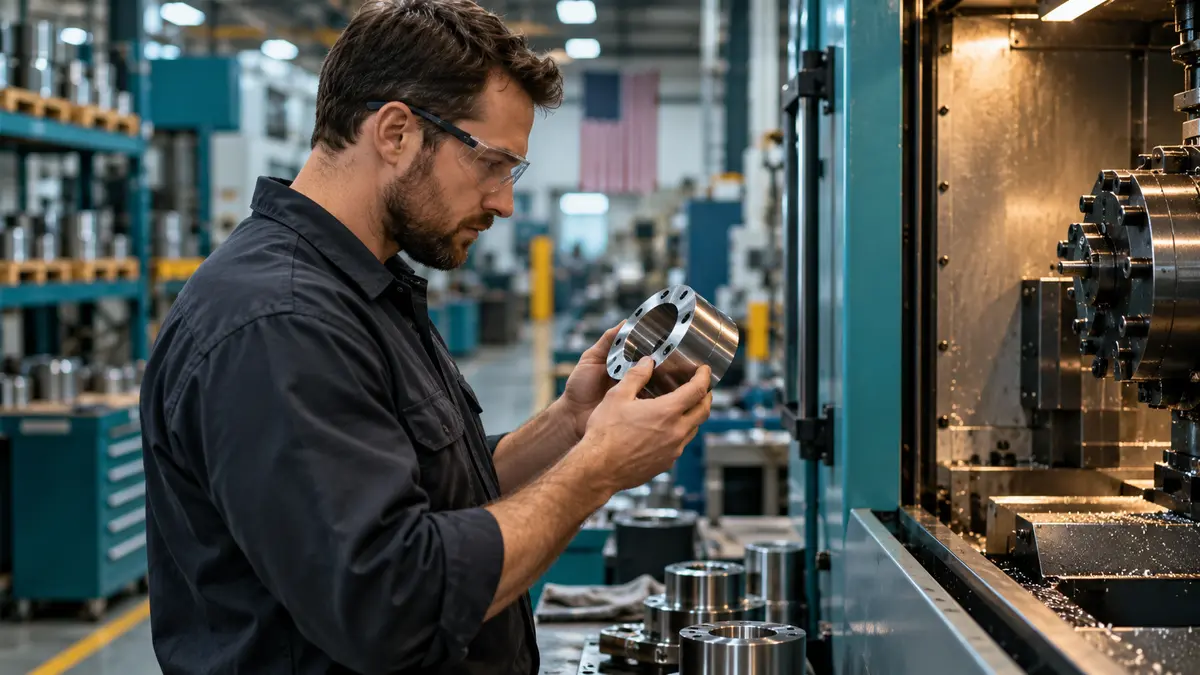
Its gears require suitable steel, controlled heat treatment, precise machining and accurate tooth geometry. Shafts and bearings must withstand repeated loads. Housings require casting quality and dimensional stability. Lubrication, seals, vibration and thermal behaviour have to be validated across the expected operating cycle.
A prototype can demonstrate that the design works. Serial production must demonstrate that the hundredth unit behaves like the first. That requires process control, calibrated measurement, supplier discipline and traceability. A factory also needs endurance rigs and a method for learning from field failures.
The reported discussion did not prove that such a line had already been commissioned. It showed how the programme pipeline could be extended when a customer identified a missing capability. The commercial task was to convert that request into a qualified product and a stable order book.

Credit solved only one layer of the problem
Long-term industrial projects need capital before they generate revenue. Buildings, machine tools, tooling and laboratories must be paid for during development. A state-supported credit line can lengthen the investment horizon and lower uncertainty when commercial finance is expensive or unavailable.
Yet inexpensive funding cannot rescue a weak project. A plant that lacks demand, qualified engineers or competitive technology can consume credit without creating a sustainable business. The investment case must begin with a real component gap and credible customer volumes.
Financing should therefore be released against milestones. Early funds may support design and equipment orders. Later tranches can depend on installation, prototype tests, customer qualification and initial serial deliveries. Milestones create information before the full credit exposure is committed.
Currency and price risks also need attention. A project may use imported machine tools or materials even when its final product replaces imports. Exchange-rate movement, logistics costs and supplier inflation can raise the budget. A realistic reserve is better than repeated requests to enlarge the loan after construction begins.
Import substitution is a system, not a percentage
Companies often describe localisation through the share of domestic content. That metric can be useful, but it can also mislead. A product may have a high local share by weight while depending on one imported control system, bearing or specialised material that stops the entire line.
Managers should map criticality rather than count parts. A low-cost item can be strategically decisive if there is no substitute and its lead time is long. Conversely, an expensive imported machine may be tolerable if spares, service and alternative suppliers are secure.
The relevant questions are operational:
- Which failure or unavailable component can halt production?
- How many qualified suppliers exist for each critical item?
- How long would design substitution and customer requalification take?
- Which materials, software and test equipment remain externally dependent?
- Can the new supplier maintain quality at serial volume?
This approach replaces a celebratory localisation percentage with a resilience map. It also helps allocate limited investment to the gaps that matter most.
Common standards are an industrial asset
A component can be technically sound and still unusable if its interfaces, documentation or certification do not match the customer's system. Joint programmes need agreed specifications before equipment is ordered.
Standards cover dimensions, materials, electrical interfaces, software protocols, environmental conditions and maintenance procedures. They also define how evidence is produced: which laboratory performs a test, what sample size is required and how changes are controlled.
Common standards reduce duplicate testing and allow a supplier to serve several customers. But harmonisation should not lower safety or reliability requirements. The aim is one rigorous path to acceptance, not an easier path.
Version control matters. When a customer changes a specification after tooling is complete, the supplier may face costly rework. A programme office should record decisions, freeze interfaces at defined milestones and manage exceptions transparently.
Supplier development determines the second-order effect
A large factory rarely makes every part. Its competitiveness depends on smaller firms providing castings, electronics, tooling, coatings, software and services. Joint projects can therefore create a wider supplier market if procurement is designed to include capable specialists.
Small suppliers may need help with quality systems, financing and testing. Long payment periods can be more damaging than a low margin because they force a growing company to finance inventory and payroll. Anchor customers can use advance payments, framework contracts or shared equipment to remove these barriers.
Supplier development must still preserve competition. Assigning every component to one protected producer creates a new single point of failure. Where volumes permit, a second qualified source improves resilience and keeps commercial discipline.
Intellectual property rules should be explicit. A supplier needs confidence that its process knowledge will not be transferred without compensation. The system integrator needs access to drawings and service information sufficient to support the product. Contracts must balance these interests before a dispute arises.
Serial quality is harder than prototype success
Industrial policy often celebrates the first sample. Customers operate fleets and production lines, so they care about thousands of hours of reliable service. Scaling exposes variation that a prototype workshop can hide.
Materials arrive from different batches. Tools wear. Operators work different shifts. Software changes. Each source of variation can affect performance. Statistical process control, incoming inspection and calibrated measurement are essential rather than bureaucratic additions.
Warranty data should return to engineering quickly. If failures are concealed to protect a programme's reputation, the same defect spreads across the installed base. A mature system rewards early disclosure and root-cause correction.
Customers can support ramp-up by ordering pilot batches and sharing operating data. They should not accept unsafe or unreliable equipment, but demanding a perfect high-volume cost from the first unit can prevent a new supplier from learning.
A practical gate from approval to production
- Define the unavailable product and verify expected customer demand.
- Freeze critical interfaces and divide engineering responsibility.
- Approve the financing model and milestone schedule.
- Install equipment and qualify materials, processes and suppliers.
- Build prototypes, complete endurance testing and correct defects.
- Run a pilot batch under serial conditions.
- Release volume production only after customer acceptance.
Governance must cross corporate and national borders
A bilateral programme adds interfaces between ministries, banks, plant owners, designers and customers. Without clear responsibility, every delay can be blamed on another participant.
Each project needs one accountable industrial sponsor and a named customer. The sponsor controls execution; the customer confirms that the output is actually needed. A programme office can monitor common risks without replacing factory management.
Reporting should separate expenditure from progress. Money disbursed says little about whether a line can produce accepted equipment. Dashboards should show design release, equipment arrival, installation, test completion, qualification, output and defect rates.
Dispute resolution also needs speed. A six-month argument over a specification can destroy a launch schedule. Technical panels with authority to make binding decisions are more useful than repeated escalation through political meetings.
Scale can lower cost—or magnify mistakes
The Russian market can provide volumes that a Belarusian plant could not justify alone. Serving both countries helps spread development and fixed production costs. That is one of the strongest economic arguments for cooperation.
But a large guaranteed order can lock in a poor design. If qualification is rushed, defects appear across many units and repair costs multiply. Scale should follow evidence rather than political deadlines.
Capacity should be modular when demand is uncertain. A first production cell can validate the process before a second is installed. Modular investment may have a slightly higher unit cost at the beginning but reduces the risk of a large idle plant.
Export potential beyond the two-country market should be treated as upside, not assumed demand. A product must first prove reliability and price competitiveness at home. Other customers will require their own certification and support network.
Workforce is the hidden capacity constraint
Machine tools can be purchased faster than experienced technologists can be trained. New programmes need designers, metallurgists, machinists, quality engineers, software specialists and service technicians.
Factories should identify skill gaps during the design stage. Training after equipment arrives delays ramp-up and encourages dependence on external installers. Partnerships with technical universities and colleges can align curricula with actual processes.
Experienced workers are especially important when transferring production between plants. Documents rarely contain every practical detail. Structured secondments, joint launch teams and recorded process knowledge reduce the loss.
Retention matters as much as recruitment. If trained employees leave because wages, housing or working conditions are weak, the programme loses its most valuable capability. Workforce planning belongs in the investment model, not in a later human-resources appendix.
Technology sovereignty should improve productivity
Replacing a foreign product exactly can restore supply, but it may freeze an old design. The stronger objective is to build engineering capability that can improve cost, reliability and performance over successive generations.
That requires investment in design tools, simulation, laboratories and feedback from customers. Factories should measure labour hours, energy use, scrap, tool life and field reliability. Productivity gains make the product sustainable after emergency demand fades.
Digital manufacturing can help, but software should serve the process. A poorly organised line does not become efficient because it has a dashboard. Data collection is valuable when managers use it to reduce variation, downtime and inventory.
Competition remains important. A supplier protected from comparison may meet the minimum specification without improving. Benchmarking against available global technology keeps the programme focused on industrial performance rather than origin alone.
What success should look like by the end of the cycle
The twenty-seven projects should ultimately be judged through outcomes. How many reached serial production? What share of capacity was used? Did customers reduce emergency imports and downtime? Were defect and warranty levels acceptable? Could plants deliver without permanent extraordinary support?
Financial performance matters too. A strategic product may justify support during launch, but recurring losses signal a design, scale or governance problem. Transparent cost data allow policymakers to distinguish learning costs from structural inefficiency.
The wider benefit appears when engineering and supplier capabilities transfer to other products. A heat-treatment line, test laboratory or precision-machining team can serve more than one programme. That spillover can make the cooperation more valuable than the original component.
Failure should also produce information. Cancelling a project after evidence shows weak demand is better than completing an idle plant. A credible programme records why milestones were missed and applies the lesson to the next investment.
Beyond substitution toward a durable production network
The January 2024 announcement showed that the bilateral portfolio had expanded from a small starting group to twenty-seven approved programmes. The 105-billion-ruble credit framework provided a financial base, while examples such as high-speed gearboxes showed the kind of missing capability the partners wanted to create.
Neither figure guaranteed success. The hard work remained in specifications, tooling, materials, workforce, testing, customer qualification and serial quality. Those activities determine whether cooperation creates resilience or merely relocates dependence.
The strongest model is selective and demanding. Each project should address a verified bottleneck, use the best available plant, preserve supplier competition and release finance against evidence. Customers should participate from design through field feedback.
If the programmes produce reliable equipment and transferable engineering skills, they will do more than replace imports. They will create a shared industrial network capable of developing the next product rather than waiting for the next shortage. That is the real test of cooperation at scale.


















HOT NEWS INTERNATIONAL
Leave a comment