
 EN
EN RU
RUA manufacturing strategy published in June 2025 argues that tariffs and production technology should be modeled together when companies choose where to make goods. The practical change is to replace one global relocation rule with product-specific thresholds, scenarios and reversible decisions.
Harvard Business Review published the analysis by Daniel Kuepper, Nikolaus Lang and Jan Nordemann on 2 June 2025. The authors describe geopolitical disruption and factory technology as simultaneous forces. Their central contribution is not a prediction that production will all move in one direction, but a method for deciding when a particular footprint stops working.
A tariff is only one line in the location equation
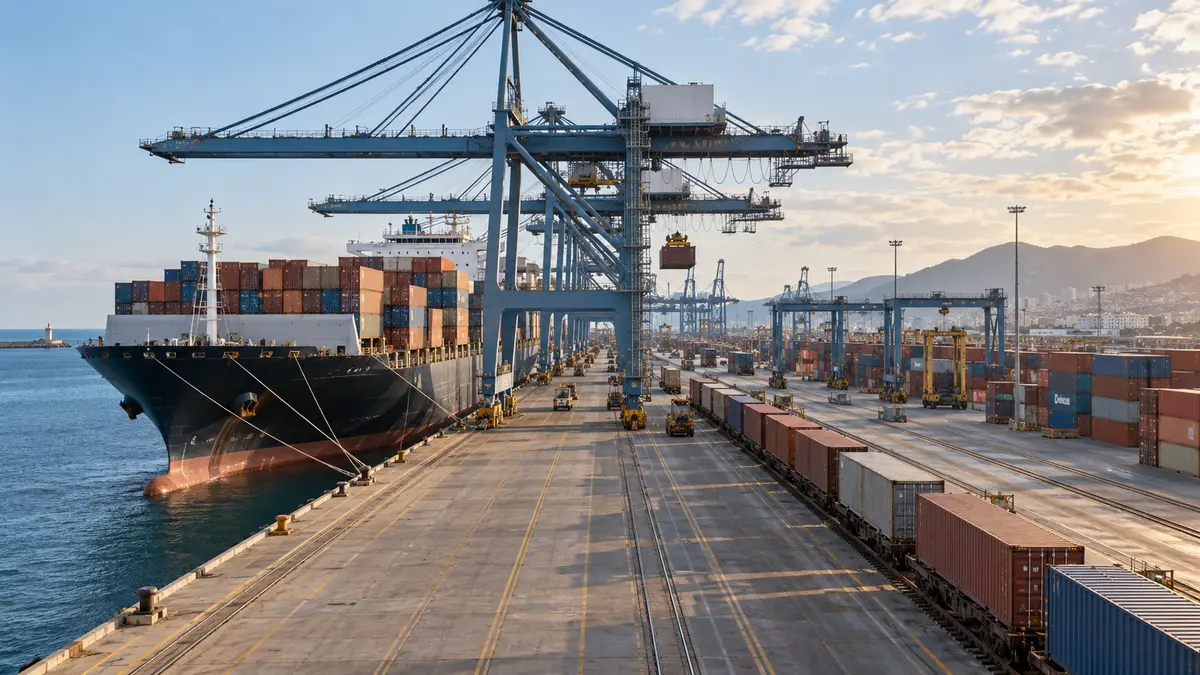
A tariff increases the landed cost of a covered import, but the business response depends on more than the published rate. Product margin, component origin, trade classification, freight, currency, inventory and the ability to pass cost to customers all change the result. A low-margin bulky product can cross its economic limit before a high-value compact one exposed to the same levy.
This is the logic of a tariff tipping point: the level at which one realistic production alternative becomes more attractive than the current path. It is not a universal percentage. It belongs to a defined product, route, set of suppliers, factory cost and planning horizon. Management must also model whether multiple duties stack and whether an exemption is temporary.

Inputs for a product-level threshold
- the duty applied to the finished good and to imported components used at the alternative site;
- freight, insurance, border delay and the working capital held in longer pipelines;
- labour, energy, land, depreciation and compliance costs at each feasible factory;
- supplier availability, quality yield, minimum order quantities and launch capacity;
- the price increase customers will accept before volume or market share declines;
- the cost of exit, duplicated capacity and an underused existing plant.
Relocation choices operate on different clocks
Changing a customs route or sourcing a standard component can sometimes be tested quickly. Qualifying a new supplier takes longer. Adding a production line may require permits, equipment and workforce development, while a greenfield factory can outlast the policy assumptions that justified it. Combining these actions in one “reshoring” label hides their very different reversibility.
A useful response ladder begins with measures that preserve options: adjust inventory, renegotiate cost sharing, revise product configuration, qualify an additional supplier and reserve flexible capacity. A company can then make a staged capital commitment as evidence improves. This does not mean delaying every investment; it means matching the irreversibility of a decision to confidence in the scenario.
Automation changes the comparison but does not settle it
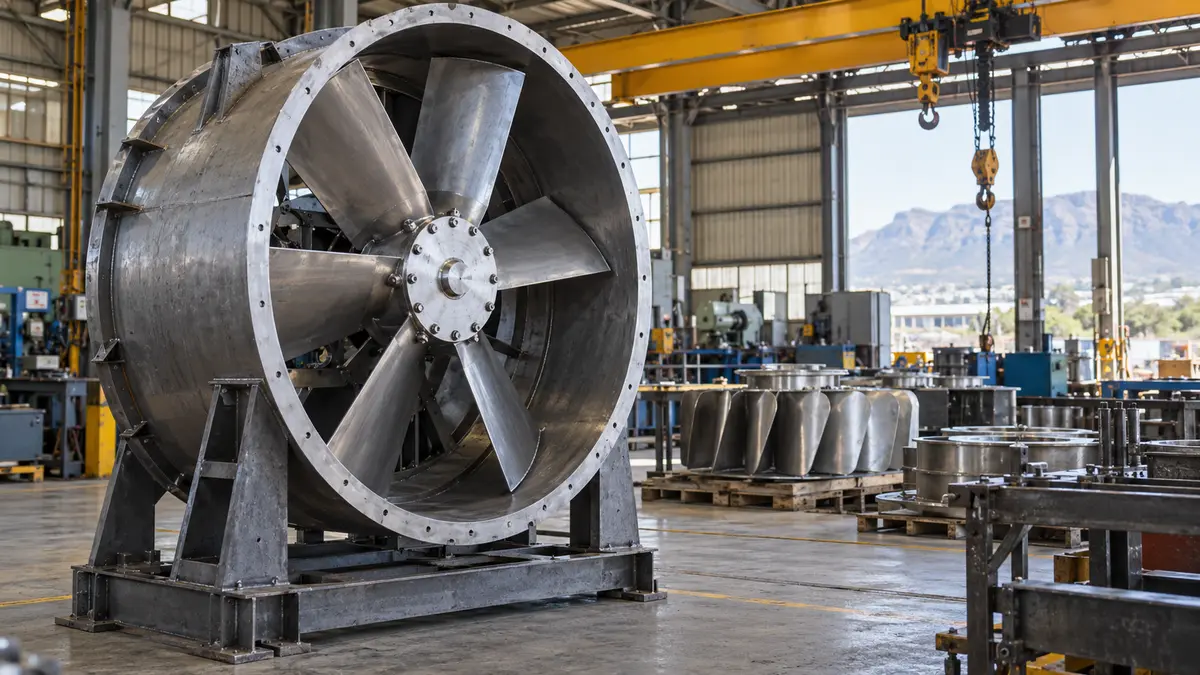
The authors connect trade disruption with the factory of the future because robotics, modular tooling, digital work instructions and faster quality feedback can narrow the operating-cost gap between locations. Flexible equipment can also make smaller regional production runs more viable. Yet buying automation creates depreciation, integration work and maintenance obligations of its own.
An automated plant still requires reliable energy, skilled technicians, process engineering, spare parts, software security and capable suppliers. A machine can reduce repetitive labour content without creating a missing material ecosystem. Location models therefore need to include the maturity and total cost of the production system, not a generic automation discount.

Scenarios should produce actions, not a single forecast
A base case alone is fragile when tariff levels, exclusions and retaliation can change faster than factory assets. Management can instead test a small set of internally consistent worlds: a short disruption, a stable high-tariff regime, repeated policy changes, or broader fragmentation accompanied by supplier restrictions. Each needs explicit triggers and a response owner.
The Boston Consulting Group summary says the method combines quantitative modeling with strategic judgment under uncertainty. That qualification is important. A spreadsheet can compare defined cash flows, but executives must still judge political durability, supplier capability, customer reaction and the value of being able to switch paths.
Signals that justify revisiting the footprint
- a tariff change pushes the landed cost of a product through its modeled threshold;
- an exclusion expires or a component becomes subject to a stacked duty;
- automation trials demonstrate a repeatable cost and quality level rather than a laboratory result;
- a second supplier reaches qualified capacity and makes regional production executable;
- customer demand shifts enough to change the utilization of existing and proposed plants;
- policy persists long enough to support a staged capital commitment.
Qualitative factors need explicit weight
Cost models often express what is easy to count while treating resilience as a vague premium. A better model assigns decision rules to less certain factors: recovery time after a disruption, depth of engineering talent, enforceability of contracts, infrastructure reliability and the time needed to approve a new product. The goal is not false precision but a transparent explanation of the trade-off.
Boards should also see where a recommendation changes when assumptions move. If a relocation works only under one tariff rate and perfect factory utilization, it is a narrow bet. If it remains attractive across several demand, exchange-rate and policy cases, it is more robust. Sensitivity matters more than the elegance of the central forecast.
Manufacturing geography becomes a continuing decision
The June analysis reframes the factory footprint from a configuration reviewed every few years into a portfolio that needs regular monitoring. Product-specific thresholds, staged investments and flexible technology allow a company to react without rebuilding its entire network after each policy announcement.
The discipline lies in keeping the model connected to operations. Tariff rates must map to bills of material, automation claims to verified cycle times, and resilience claims to qualified capacity. When those links are maintained, uncertainty becomes a set of managed choices rather than a reason for either paralysis or an expensive rush to relocate.
















HOT NEWS INTERNATIONAL
Leave a comment