
 EN
EN RU
RUDETROIT, 20 March 2026 — Battery factories planned for a faster expansion of electric cars are finding another customer: the power system. Ford and major cell producers are redirecting equipment toward stationary storage for utilities, industrial sites and data centres as vehicle demand leaves parts of the manufacturing base underused.
The shift is not as simple as placing a car battery beside a substation. Stationary systems favour different chemistry, packaging, safety controls and commercial contracts. Yet an existing factory already has costly dry rooms, formation equipment, quality systems and trained workers, making conversion potentially faster than building an entirely new supply chain.
Vehicle capacity is being reassigned to a growing load
The Wall Street Journal reported that battery makers including Ford, LG Energy Solution, Samsung SDI and AESC were shifting American production toward industrial and utility storage. The new demand comes from power grids adding renewable generation and data centres seeking dependable electricity.
For manufacturers, the opportunity uses assets that might otherwise operate below design capacity. For customers, domestic production can shorten delivery chains and help projects satisfy sourcing rules. Neither advantage guarantees profit: storage prices are competitive, and a converted plant still has to reach high yield and reliable output.

The product changes at several levels
- cell chemistry is chosen for cycle life, cost and thermal behaviour rather than maximum driving range;
- modules are arranged in fixed racks instead of a vehicle floor;
- containers add cooling, fire detection, isolation and power conversion interfaces;
- software coordinates charging with grid prices and customer loads;
- warranties depend on years of cycling, temperature and available capacity.
Ford is building a vertically connected storage business
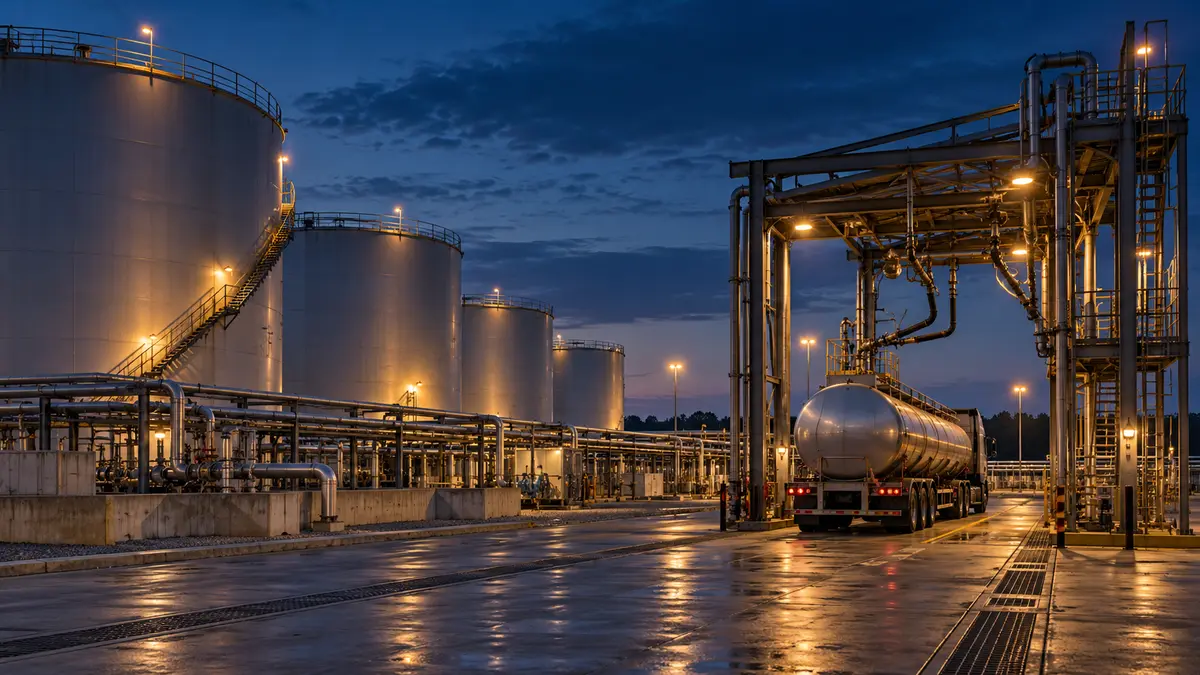
Ford Energy says it plans roughly $2 billion of investment and at least 20 GWh of annual deployment capacity. The company intends to convert battery manufacturing in Glendale, Kentucky, and make prismatic lithium iron phosphate cells, rack modules and 20-foot DC container systems.
First customer deliveries are planned for late 2027. That date matters because the initiative is still a manufacturing programme, not current commercial volume. Ford must install or modify equipment, qualify the cells, integrate complete systems and build a customer pipeline before the proposed capacity becomes revenue.
Stationary storage changes the chemistry trade-off
Many long-range vehicles use nickel-manganese-cobalt, or NMC, cathodes because high energy density reduces battery weight for a given driving range. Stationary systems do not carry their own mass, so lithium iron phosphate, or LFP, can trade lower energy density for lower material cost, longer cycle life and stronger resistance to thermal runaway.
Changing from NMC to LFP affects coating materials, cell design and process settings. Existing buildings and some equipment remain valuable, but conversion is not merely a new label at the end of the line. Suppliers of cathode material, separators, controls and fire systems must also fit the stationary design.

A billion-dollar supply contract puts demand behind the thesis
Samsung SDI announced a KRW 1.5 trillion contract, approximately $1 billion, to supply energy-storage batteries to an unnamed American energy company over four years through 2029. Production is assigned to the StarPlus Energy joint-venture plant in Indiana.
The contract illustrates why manufacturers are willing to convert capacity: a multi-year order can support equipment utilisation and workforce planning. The customer remains unidentified, so the announcement does not reveal project locations, unit pricing or how much of the plant's available output the order will absorb.
Data centres turn batteries into operating infrastructure
Within the United States, large computing campuses can face long waits for new grid connections. A battery cannot create energy, but it can smooth peaks, support backup arrangements and let a site draw power differently across the day when paired with sufficient generation and interconnection capacity.
Utilities use larger installations to balance supply, defer selected network upgrades and respond quickly to changes in frequency or load. These applications value availability and repeated cycling. They therefore reward a manufacturer that can provide a complete, serviceable system rather than cells alone.
The conversion has its own industrial risks
Automotive factories are built around stringent quality and traceability, useful disciplines for grid storage. But stationary projects buy on different schedules and may require finance, construction partners, long commissioning periods and guarantees covering the entire system. A cell maker must learn a project business as well as a new product.
There is also a capacity risk. If many manufacturers redirect idle lines simultaneously, stationary-battery supply may grow faster than installations, repeating the imbalance that weakened vehicle-cell economics. Winning orders at low prices will not rescue a plant if warranties, integration failures or underused equipment consume the margin.
A second market can preserve capability without erasing the first bet
The move into grid and data-centre storage gives battery factories another route to utilisation while electric-vehicle demand develops. It preserves production skills and domestic supply networks that would be costly to rebuild after a closure. It also diversifies revenue away from vehicle launches and model cycles.
Success will be visible in delivered gigawatt-hours, factory yield, system reliability and repeat orders—not in announced nameplate capacity. The factory's second market is credible because the grid needs storage, but the conversion creates value only when a redesigned industrial line produces complete systems that customers can operate safely for years.
















HOT NEWS INTERNATIONAL
Leave a comment